Albania's Ultimate 14-Day Coast to Mountains Road Trip

Imagine waking up to the sound of Ionian waves lapping at a pebble beach, then two days later standing on a mountain trail with snow-capped peaks reflected in a glacial lake. That is not a fantasy itinerary stitched together from two different countries — that is Albania, one of Europe's last great travel secrets, and it fits neatly into a single two-week road trip. From the sun-drenched Albanian Riviera in the south to the raw wilderness of the Valbona and Theth valleys in the north, this small Balkan nation rewards curious travellers with jaw-dropping scenery, UNESCO-listed old towns, and some of the most generous hospitality on the continent.
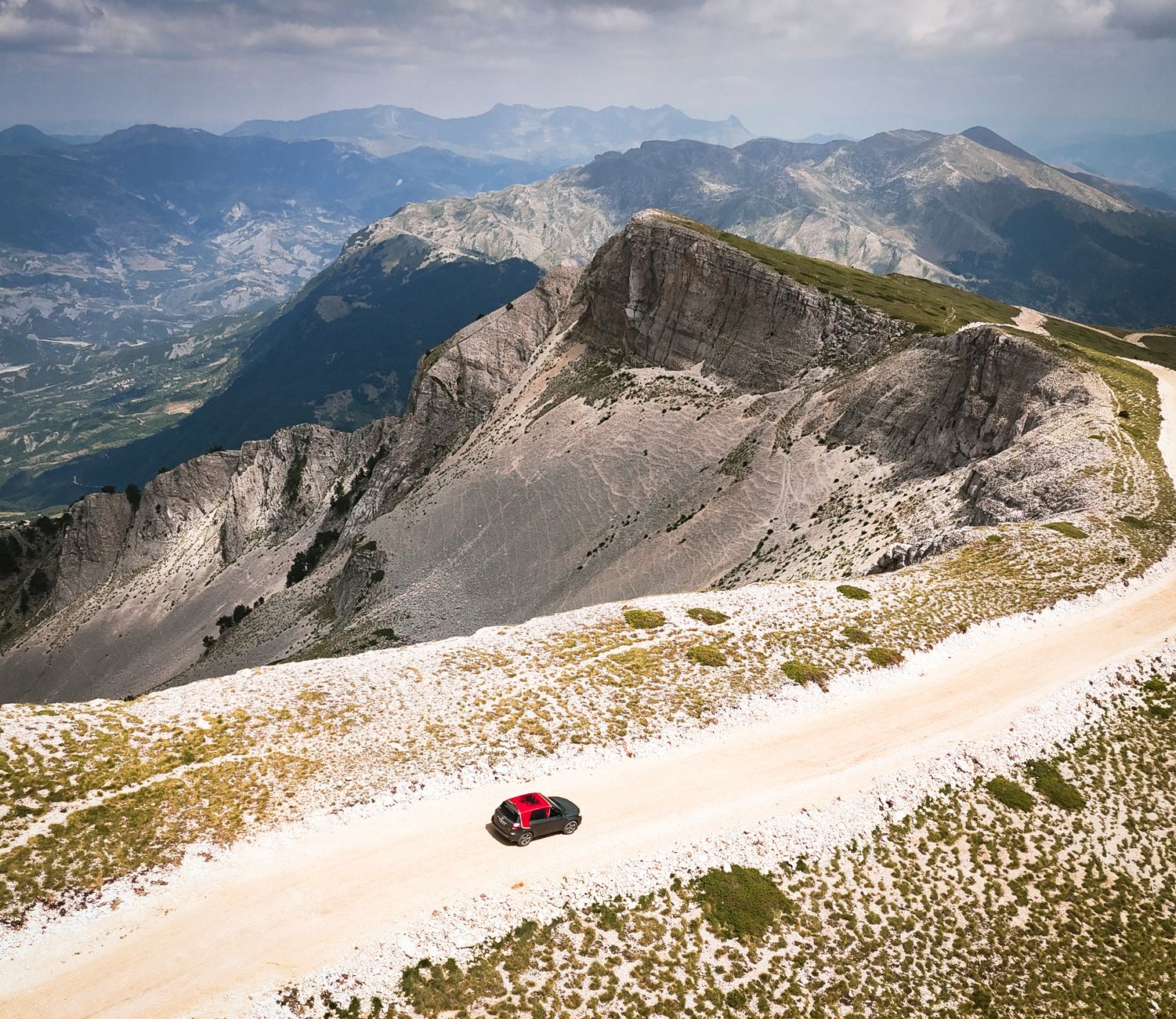
Albania's road network has improved dramatically in recent years, making a self-drive adventure more practical than ever. You can rent a car in Tirana, loop south to the coast, cut inland through the mountains, drift through the historic heartland, and then push north to the Alps — all before returning to the capital. The 14-day itinerary in this guide covers roughly 1,400 kilometres, yet it never feels rushed. Every stop earns its place, whether that is a sleepy fishing village, a medieval castle perched on a clifftop, or a canyon that looks like it belongs in a different universe. Pack light, fill the tank, and get ready to discover why seasoned travellers are calling Albania the destination of the decade.
Key Takeaways
| Total Distance | Approximately 1,400 km by road |
|---|---|
| Best Season | May to October for coast; June to September for mountains |
| Daily Budget | Budget: 30 EUR | Mid-range: 70 EUR | Comfort: 130+ EUR |
| Driving Difficulty | Moderate — some mountain roads require care and a capable vehicle |
| Must-Have Documents | Valid driving licence, vehicle insurance, and passport or EU ID |
| Currency | Albanian Lek (ALL); carry cash for small towns and mountain villages |
| Language | Albanian; English widely spoken in tourist areas |
Days 1–2: Tirana — Your Road Trip Launchpad

Your journey begins in Tirana, Albania's vibrant and surprisingly colourful capital. Spend your first day soaking up the energy of Skanderbeg Square, exploring the National History Museum, and wandering the pastel-painted buildings of the Blloku neighbourhood. Tirana is not just a transit hub — it is a city with genuine personality, and a day here sets the cultural tone for the whole trip.
On day two, sort out your rental car early in the morning and use the afternoon for a short warm-up drive south to Kruja, a hilltop town about 30 kilometres north of the capital. Kruja's medieval bazaar is one of the best-preserved Ottoman markets in the Balkans, and the castle museum dedicated to national hero Gjergj Kastrioti Skanderbeg is genuinely moving. Return to Tirana for the night, stock up on snacks and an offline map, and go to bed early — the real adventure starts tomorrow.
- Visit Skanderbeg Square and the Et'hem Bey Mosque in the morning
- Explore the colourful Blloku district for coffee and people-watching
- Day-trip to Kruja castle and the old bazaar for handmade crafts
- Collect your rental car and check tyre condition and spare wheel
- Download offline maps and save key waypoints before leaving the city
Book your rental car at least two weeks in advance during summer. Request a vehicle with decent ground clearance — you will thank yourself on mountain roads later in the trip.
Days 3–5: The Albanian Riviera — Beaches, Cliffs, and Fishing Villages

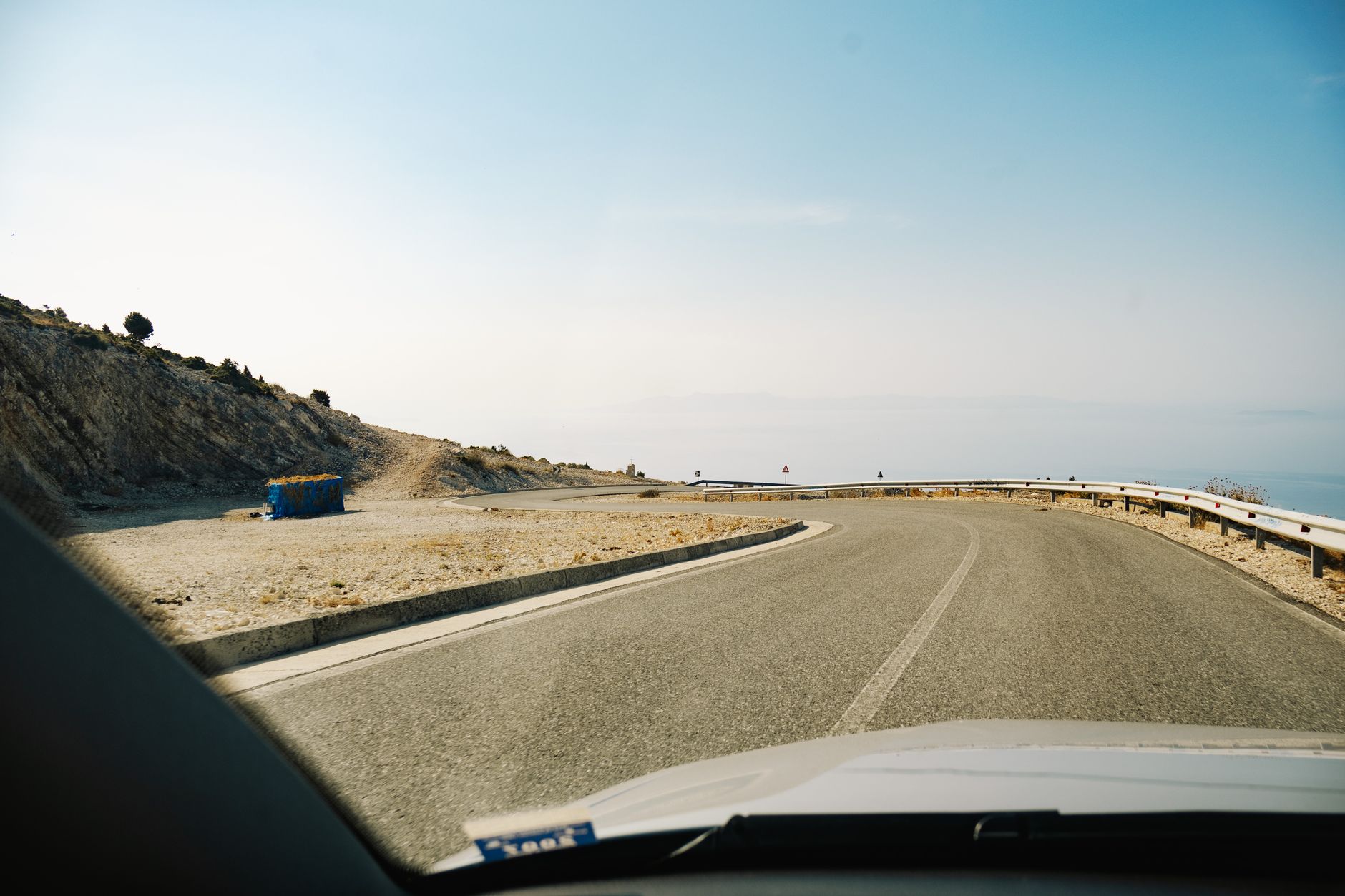
The drive south from Tirana to the Albanian Riviera along the SH4 and then the coastal road is one of the most scenic in all of Europe. You will pass through Llogara National Park, where the road climbs to over 1,000 metres before plunging dramatically down to the coast in a series of hairpin bends. Pull over at the Llogara Pass viewpoint — the panorama of the Ionian Sea stretching to the horizon is nothing short of spectacular.
Base yourself in Himara for two nights. This relaxed town sits between the mountains and the sea and gives you easy access to the best beaches on the Riviera. Spend one full day at Gjipe Beach, a hidden gem accessible via a short hike through a canyon, and another exploring the nearby villages of Palasa and Dhermi, where whitewashed houses cling to the cliffs above impossibly blue water.
On day five, drive the final stretch south to Saranda, stopping at the ancient Greek and Roman ruins of Butrint, a UNESCO World Heritage Site that sits on a forested peninsula surrounded by a lagoon. Butrint is one of Albania's most important archaeological sites, and the walking trail through the ruins takes about two hours. Arrive in Saranda by late afternoon and treat yourself to fresh seafood on the promenade as the sun sets over Corfu island across the water.
- Stop at Llogara Pass for mountain-to-sea panoramic views
- Swim at Gjipe Beach, reached by a short canyon hike from the road
- Explore the clifftop villages of Dhermi and Palasa
- Visit Butrint UNESCO ruins — allow at least two hours on site
- Watch the sunset from Saranda's waterfront promenade
- Try fresh grilled octopus and byrek pastry at a local tavern
Avoid driving the Llogara mountain road at night. The hairpin bends are manageable in daylight but genuinely challenging after dark, especially if you encounter oncoming coaches.
Days 6–7: Gjirokastra and Berat — The Stone City and the City of a Thousand Windows

Leaving the coast behind, you head inland toward two of Albania's most extraordinary historic cities, both UNESCO-listed and both utterly unlike anywhere else in the Balkans. Gjirokastra comes first — a dramatic Ottoman city built on a steep hillside, its grey stone towers and slate rooftops tumbling down toward the valley below. The massive Gjirokastra Castle dominates the skyline and houses a fascinating weapons museum and an abandoned American spy plane, a relic of the Cold War that feels completely surreal.
Wander the old bazaar, visit the birthplace of communist dictator Enver Hoxha (now a museum), and spend the night in a traditional guesthouse built into the hillside. The stone architecture here is genuinely unlike anything else in Europe — Gjirokastra earned its UNESCO status for very good reason.
Day seven takes you north to Berat, the so-called City of a Thousand Windows, where rows of white Ottoman houses with their large windows stare out from the hillside like eyes. The upper citadel, Kalaja, is a living neighbourhood where families still reside among Byzantine churches and crumbling towers. Walk down to the Mangalem quarter, cross the Ottoman bridge over the Osum River, and explore the Gorica neighbourhood on the opposite bank. Berat is deeply photogenic at every hour, but golden hour light on those white facades is something you will never forget.
- Tour Gjirokastra Castle and the Cold War-era spy plane exhibit
- Stay overnight in a traditional stone tower house in Gjirokastra
- Walk the cobbled bazaar streets and try local tavë kosi (baked lamb with yogurt)
- Explore Berat's living citadel, Kalaja, and its Byzantine churches
- Cross the old Ottoman stone bridge for views of the Mangalem quarter
- Photograph the iconic thousand-windows facade from the hillside opposite
In Berat, climb to the citadel in the late afternoon and stay for sunset. The light on the white houses is magical, and the crowds thin out after 5 PM, giving you the place almost to yourself.
Days 8–9: Ohrid Corridor and Lake Prespa — The Quiet Heartland

This stretch of the itinerary takes you through Albania's quieter interior, a landscape of rolling hills, Orthodox monasteries, and glittering lakes that most visitors skip entirely — which means you will often have it all to yourself. Drive northeast from Berat toward Korça, passing through the Osum Canyon, a dramatic gorge where the river has carved towering walls of rock over millennia. If you have time, a short rafting excursion through the canyon is an unforgettable experience.
Korça is Albania's cultural capital in the eyes of many Albanians — a refined city with a strong French architectural influence, excellent restaurants, and a lively café culture. Spend a morning here, visit the National Museum of Medieval Art with its remarkable collection of Byzantine icons, and sample the region's famous Korça beer at a pavement café.
From Korça, a short drive brings you to the shores of Lake Prespa, a tranquil body of water shared between Albania, North Macedonia, and Greece. The lake is a protected biosphere reserve and home to one of Europe's largest colonies of Dalmatian pelicans. The village of Lin, perched on a tiny peninsula jutting into Lake Ohrid on the way back west, has a fifth-century mosaic floor hidden beneath a modest church that will genuinely take your breath away.
- Drive through or raft the spectacular Osum Canyon
- Visit Korça's National Museum of Medieval Art for Byzantine icons
- Explore the biosphere reserve around Lake Prespa
- Look for Dalmatian pelicans on the lake shore at dawn or dusk
- Find the hidden fifth-century mosaic in the village church at Lin
- Try Korça's famous local beer and flija layered pastry
The road around Lake Prespa can be narrow and partially unpaved. Take it slowly and you will be rewarded with some of the most peaceful and photogenic scenery in the entire country.
Days 10–11: The Valbona Valley — Gateway to the Accursed Mountains
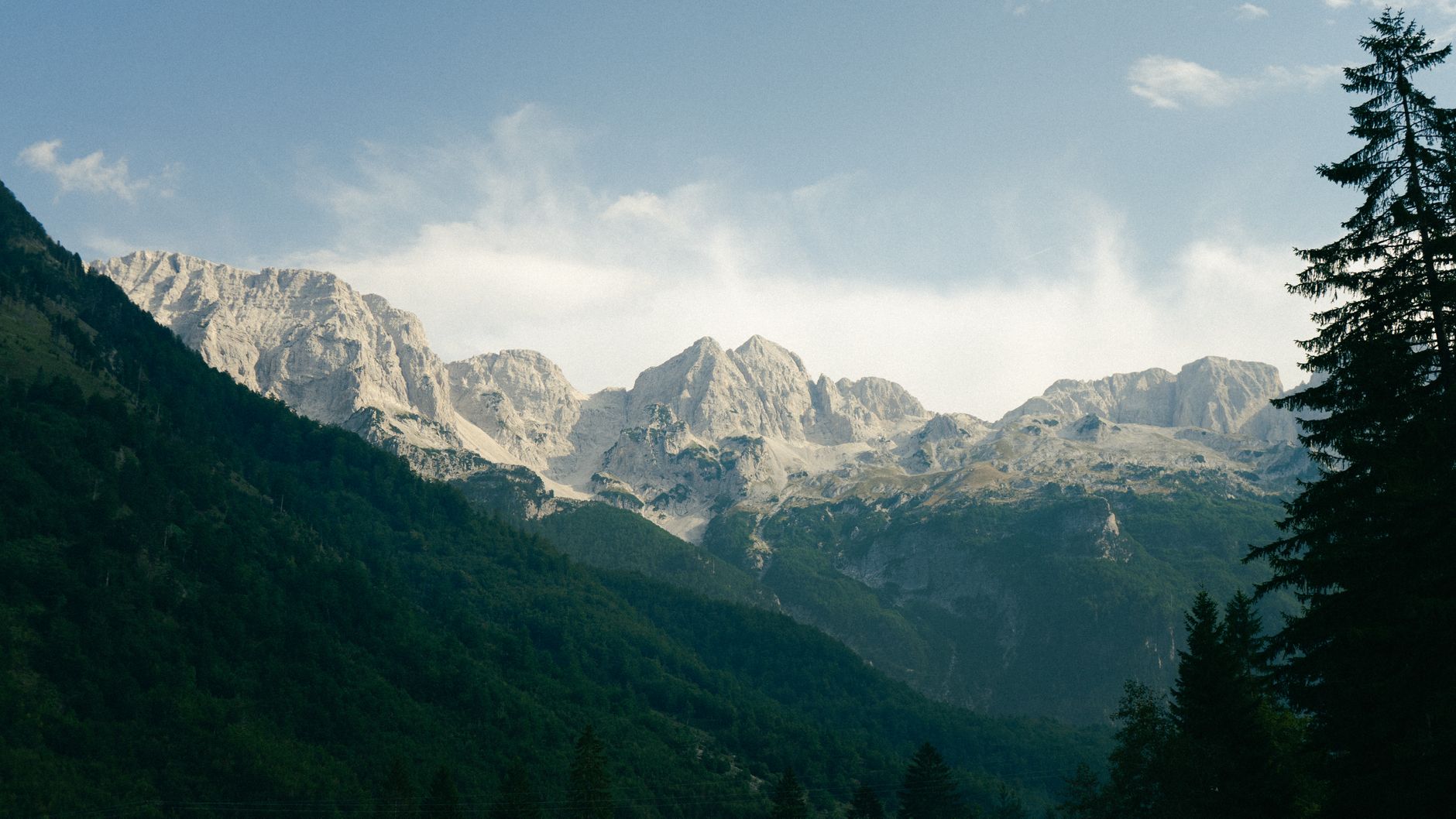
The drive north from the heartland to the Albanian Alps is long but absolutely worth every kilometre. As you gain altitude on the approach to Valbona, the landscape transforms from gentle farmland into something primeval — jagged limestone peaks, dense beech forests, and rivers the colour of glacial mint. The Valbona Valley National Park is one of the most pristine wilderness areas in Europe, and the air here genuinely feels different from anywhere else on the trip.
Check into a family-run guesthouse — accommodation in Valbona is almost exclusively run by local families, and staying with them is as much a cultural experience as a practical one. Your hosts will almost certainly cook you a dinner of mountain cheese, smoked meats, cornbread, and honey that you will still be thinking about weeks later.
Dedicate day eleven entirely to hiking. The most popular route is the Valbona to Theth trail, a moderately challenging full-day hike over the Valbona Pass at 1,793 metres. The views from the pass are among the finest in the Balkans — a 360-degree panorama of serrated ridges and deep green valleys. If you prefer a shorter outing, the walk up to the Rrogam viewpoint takes just two to three hours and delivers equally dramatic scenery.
- Drive the scenic northern road through Shkodra to reach Valbona
- Stay in a family guesthouse for authentic mountain hospitality
- Hike the Valbona to Theth trail over the 1,793-metre Valbona Pass
- Shorter option: the Rrogam viewpoint hike (2–3 hours round trip)
- Eat a traditional mountain dinner cooked by your guesthouse hosts
- Look for golden eagles and chamois on the high ridgelines
The Valbona to Theth hike is best done with a local guide if you are not an experienced mountain hiker. Trails can be poorly marked, and weather in the Alps changes rapidly even in summer.
Days 12–13: Theth and the Blue Eye of the North — Waterfalls and Stone Towers

If you hiked over the pass from Valbona, you arrive in Theth with tired legs and a full heart. If you drove, you approach along a winding mountain road that is an adventure in itself. Either way, Theth will stop you in your tracks. This tiny village of stone houses and wooden haystacks sits in a valley so perfectly framed by mountains that it looks like a film set. The centrepiece is the Theth Church, a simple 19th-century structure that has become one of Albania's most photographed images.
Spend day twelve exploring the valley on foot. The Grunas Waterfall is a 30-minute walk from the village centre and drops 30 metres into a cool pool — perfect for a swim after the hike. Nearby, the Kulla e Ngujimit, or Lock-in Tower, is a fascinating relic of the Kanun, the ancient Albanian code of honour that once governed blood feud disputes. Men who had committed a killing could take refuge in these towers for years.
On day thirteen, make the short drive to the Blue Eye of Theth, a natural spring that bubbles up from underground with an otherworldly cobalt-blue colour. It is smaller than its famous southern cousin near Saranda, but arguably more magical in its mountain setting. Spend the afternoon driving back down toward Shkodra, stopping at Lake Shkodra — the largest lake in Southern Europe — for a final lakeside dinner before the last leg home.
- Photograph Theth Church framed by the surrounding mountain peaks
- Swim in the pool beneath Grunas Waterfall after the morning hike
- Visit the Kulla e Ngujimit tower and learn about the Kanun code
- Swim or picnic at the Blue Eye spring near Theth village
- Drive down to Shkodra and enjoy sunset on the shores of Lake Shkodra
- Try fresh lake fish — carp and eel are local specialities
The road into Theth from Shkodra is rocky and steep in places. A vehicle with good ground clearance is strongly recommended, and check road conditions locally before setting off in wet weather.
Day 14: Shkodra to Tirana — A Grand Finale
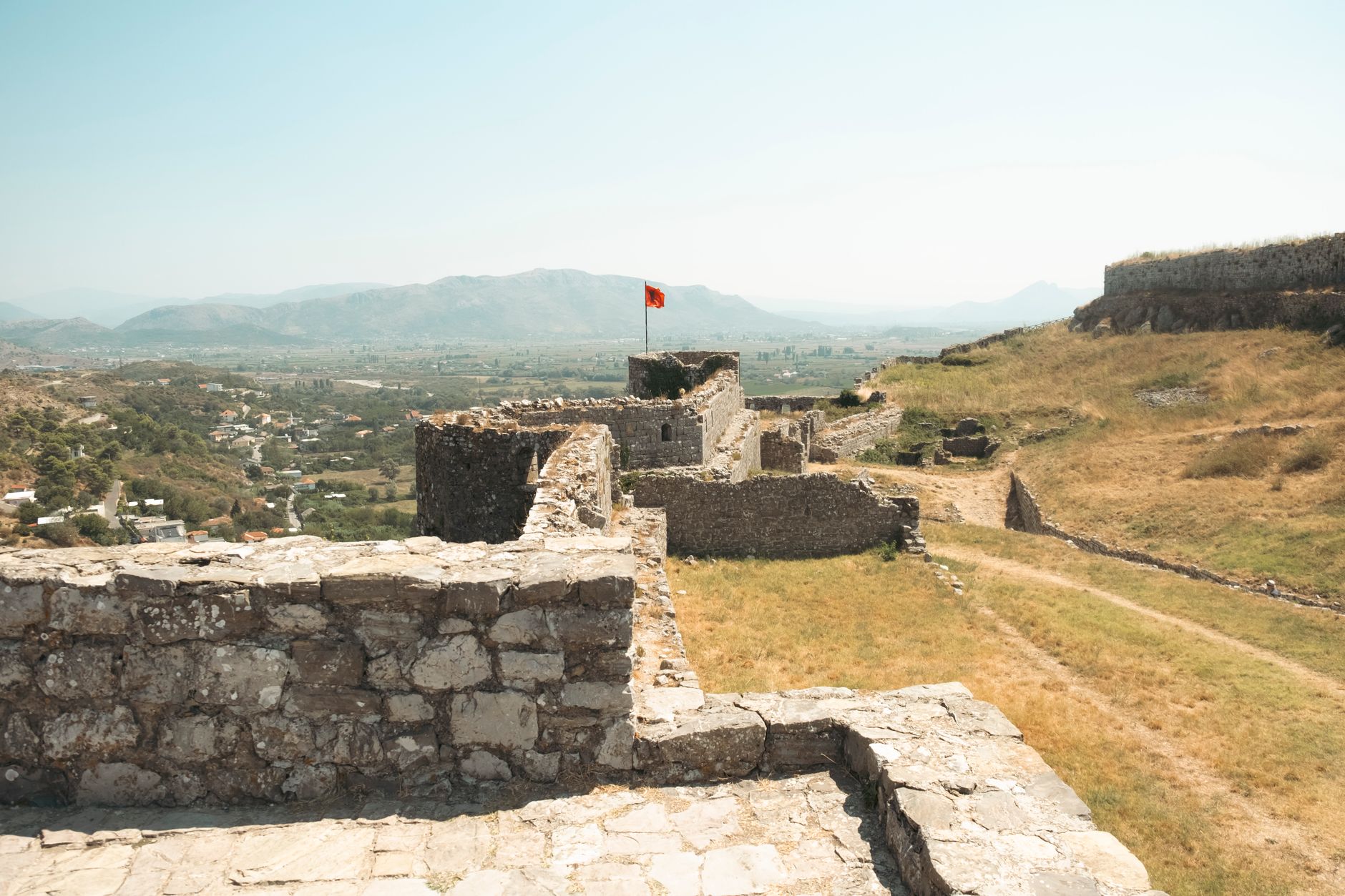
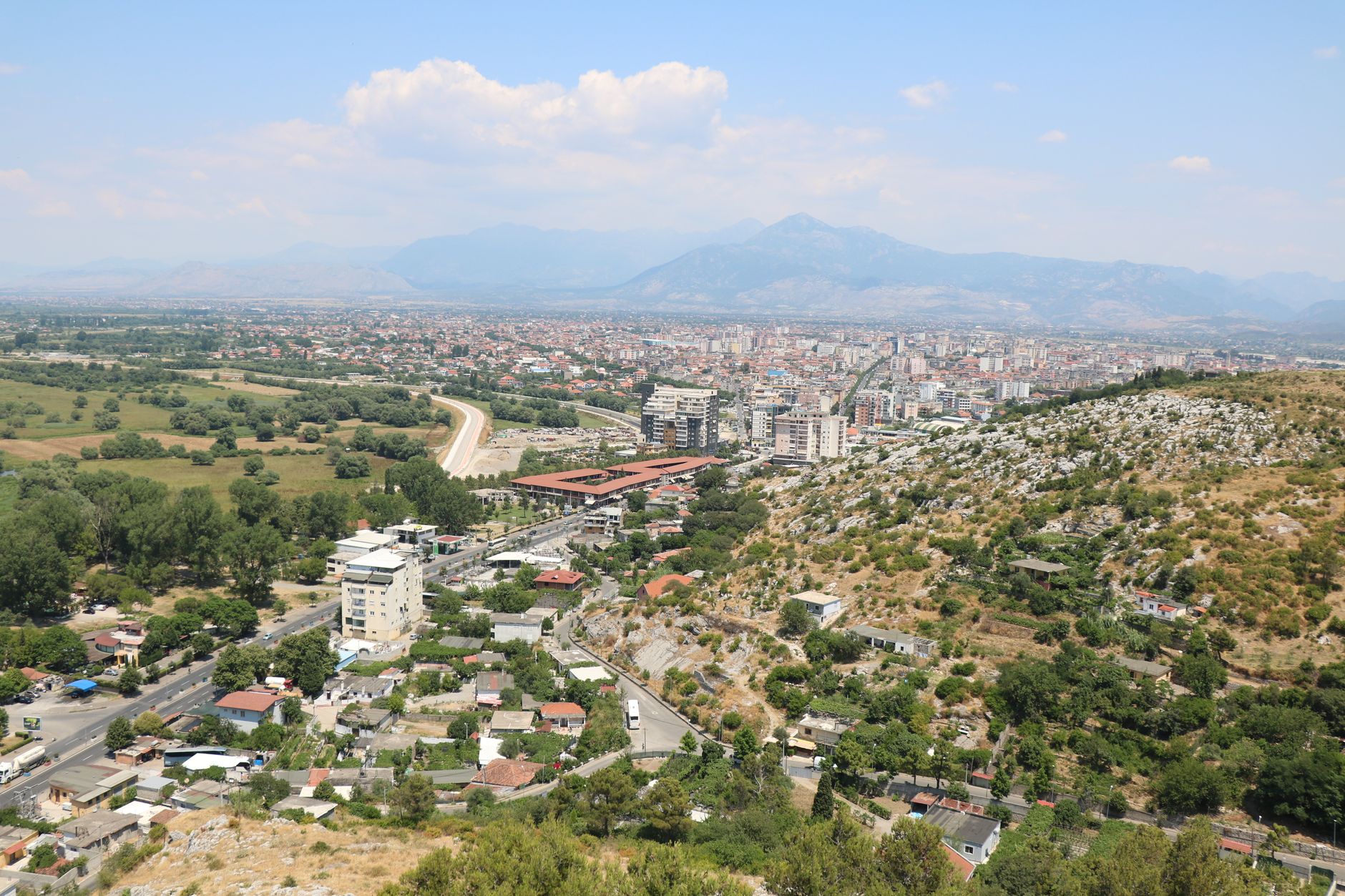
Your final day begins in Shkodra, one of Albania's oldest and most historically rich cities. Rise early and visit Rozafa Castle before the tour groups arrive. The fortress sits on a rocky hill above the confluence of three rivers and offers sweeping views over the lake, the plains, and the mountains you have just come from. The legend of Rozafa — a woman supposedly walled into the castle foundations so that it would stand strong — is one of Albania's most haunting folk stories, and hearing it here, on site, gives you goosebumps.
Shkodra's old bazaar district is worth a morning stroll, and the city's cycling culture — it has more bikes per capita than almost any other city in the Balkans — gives it a relaxed, European feel that is a pleasant contrast to the wild mountain days just passed. Have a long lunch at a riverside restaurant, then begin the two-hour drive south on the motorway back to Tirana.
Arrive in Tirana in the late afternoon with just enough time to return the rental car, check into your hotel, and head out for a celebratory dinner in Blloku. Order a raki to start, raise a glass to 1,400 kilometres of extraordinary roads, and let the memories of turquoise bays, mountain passes, Ottoman towers, and glacial springs wash over you. Albania gave you everything it promised, and then some.
- Visit Rozafa Castle at sunrise for the best light and fewest crowds
- Stroll Shkodra's old bazaar and rent a bike to explore like a local
- Drive the motorway south to Tirana — a smooth two-hour journey
- Return the rental car and settle into your final night accommodation
- Celebrate with a raki and a long dinner in Tirana's Blloku district
- Reflect on the trip and start planning your return visit
Leave Shkodra by 2 PM at the latest to avoid Tirana's rush-hour traffic, which builds up significantly between 5 and 7 PM on the main northern approach road.
Albania Road Trip: Region-by-Region at a Glance
| Region | Days | Highlight | Road Difficulty | Best For |
|---|---|---|---|---|
| Tirana and Kruja | 1–2 | Skanderbeg Square, Kruja Castle | Easy — city and highway | Culture, history, urban energy |
| Albanian Riviera | 3–5 | Gjipe Beach, Butrint Ruins, Saranda | Moderate — mountain coastal road | Beaches, archaeology, seafood |
| Gjirokastra and Berat | 6–7 | UNESCO old towns, Ottoman architecture | Easy to moderate — inland roads | History, photography, food |
| Korça and Lake Prespa | 8–9 | Byzantine art, pelicans, lakeside calm | Moderate — some unpaved sections | Nature, off-the-beaten-path |
| Valbona Valley | 10–11 | Albanian Alps, hiking, wilderness | Challenging — mountain roads | Hiking, nature, adventure |
| Theth and Shkodra | 12–14 | Waterfalls, Blue Eye, Rozafa Castle | Challenging to easy — mix of terrain | Trekking, folklore, lakes |
Frequently Asked Questions
Do I need a special licence or permit to drive in Albania?
A standard driving licence from any EU country or an International Driving Permit is fully accepted in Albania. You do not need any special permit. However, make sure your rental car insurance covers Albania specifically, as some policies exclude it. Always carry your licence, passport, and vehicle documents when driving.
What is the best time of year to do this road trip?
June through September is ideal for the full coast-to-mountains itinerary. The Riviera beaches are at their best in July and August, though those months can be crowded and hot. For a quieter experience with comfortable temperatures, May to early June and September to October are excellent choices. The northern mountain roads can be snowed in from November to April, so avoid the Alps section in winter.
Is Albania safe for solo travellers and families?
Albania is considered one of the safer countries in the Balkans for tourists. Violent crime against visitors is rare, and Albanians are famously hospitable toward guests. Standard travel precautions apply — keep valuables secure, be alert in busy markets, and avoid driving mountain roads at night. Families with children will find Albanians especially warm and welcoming.
How much cash should I carry for this road trip?
While cities like Tirana, Saranda, and Shkodra have ATMs and card-accepting restaurants, many mountain guesthouses, small villages, and roadside eateries operate on cash only. Carry enough Albanian Lek for at least two to three days of expenses whenever you are heading into rural or mountain areas. A budget of 30 to 50 EUR per day in cash covers accommodation and meals in most rural spots.
Can I do this road trip in a standard rental car, or do I need a 4x4?
A standard car with decent ground clearance — such as a compact SUV or crossover — will handle the vast majority of this itinerary comfortably. The roads to Theth and some sections around Lake Prespa are rocky and benefit from higher clearance. A true 4x4 is not essential but gives you extra confidence on mountain tracks. Always check road conditions locally before heading into remote areas.
Are there fuel stations along the entire route?
Fuel stations are plentiful on major roads and in all towns and cities. However, in the northern mountain valleys — particularly around Valbona and Theth — stations are scarce. Always fill your tank before heading into the Alps and do not let it drop below half when driving remote mountain roads. Carry a note of the nearest town with a fuel station as a backup plan.
Plan your Albania adventure
Albania's 14-day road trip is more than a journey between destinations — it is a complete transformation of your understanding of what Europe can be. In two weeks you will have swum in Ionian waters so clear you can count the pebbles ten metres below, stood inside a living Ottoman citadel, hiked a mountain pass that feels like the edge of the world, and shared a meal with a mountain family whose generosity will humble you. Very few countries on the continent can offer that range of experience in such a compact, affordable, and genuinely authentic package. Albania does not just meet your expectations; it quietly, confidently exceeds them at every turn.
The road is waiting for you. Load up the car, point it south from Tirana, and let Albania unfold at its own pace. You will encounter rough patches — a potholed mountain road, a confusing junction with no signage, a guesthouse with cold water — but these are not inconveniences, they are the texture of real travel. Come back from this trip with muddy boots, a phone full of photographs you can barely believe you took, and a deep, warm affection for one of Europe's most extraordinary countries. Albania will get under your skin, and you will already be planning your return before you have even landed home.