Photography Hotspots in Albania: 12 Must-Visit Locations

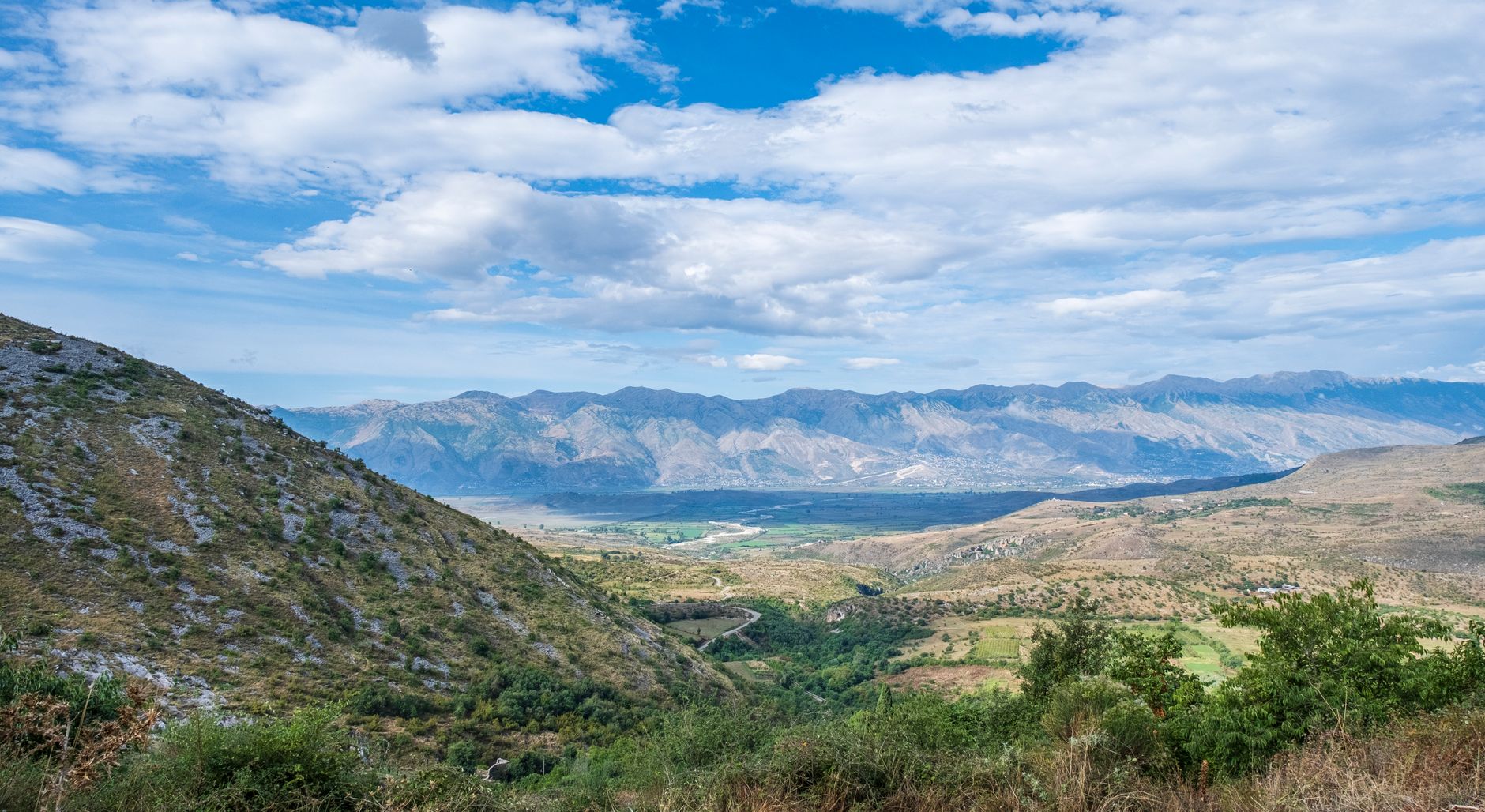
Albania is the kind of place that makes photographers feel like they have stumbled onto a secret. While the rest of Europe fills up with selfie sticks and tour buses, Albania quietly holds onto its raw beauty, its crumbling Ottoman architecture, its impossibly blue waters, and its mountain villages that look frozen in another century. Every corner you turn feels like a frame waiting to be captured, and the light here, especially in the golden hours of early morning and late afternoon, is nothing short of extraordinary.
From the UNESCO-listed old towns of Berat and Gjirokastra to the wild Albanian Riviera and the snow-dusted peaks of the Accursed Mountains, this country packs an astonishing variety of visual subjects into a relatively small geographic footprint. You can photograph a Byzantine castle at sunrise, eat lunch beside a turquoise lagoon, and shoot a shepherd leading his flock along an ancient stone path before dinner. Albania rewards the curious photographer with layers of history, culture, and natural drama that few other European destinations can match.
In this guide, you will discover 12 of the most photogenic locations in Albania, along with practical tips on the best times to visit, what to look for through the lens, and how to make the most of each spot. Whether you are a seasoned travel photographer or someone who simply loves capturing beautiful places on your smartphone, Albania is about to become your new favourite subject.
Key Takeaways
| Best Overall Photography Season | April to June and September to October for soft light and fewer crowds |
|---|---|
| Top Coastal Spot | Ksamil Beach for turquoise water and island compositions |
| Best Architecture Subject | Berat Old Town, known as the City of a Thousand Windows |
| Most Dramatic Landscape | Valbona Valley in the Albanian Alps for mountain grandeur |
| Hidden Gem | Theth Village for traditional stone architecture and waterfall access |
| Golden Hour Champion | Gjirokastra Castle for sweeping valley and rooftop views |
| Budget Consideration | Albania is very affordable, making extended photography trips highly accessible |
Berat and Gjirokastra: The UNESCO Double Act

If you only have time for two stops on your Albanian photography journey, make them Berat and Gjirokastra. Both are UNESCO World Heritage Sites, both are perched dramatically on hillsides, and both offer a visual richness that will keep your shutter busy for days. Berat earns its nickname, the City of a Thousand Windows, from the rows of white Ottoman houses stacked up the hillside, each one punctuated by large symmetrical windows that catch and reflect the light in mesmerising ways. The best vantage point is from across the Osum River, where you can frame the entire Mangalem quarter against the medieval castle that crowns the hill above.
Gjirokastra, meanwhile, is darker and more brooding, built from grey stone that glows silver in the right light. The castle here is enormous and offers panoramic views over the old bazaar district and the valley below. Early morning is your best ally in both cities. The streets empty out, the light is warm and directional, and you will have the cobblestone alleys virtually to yourself. In Gjirokastra, the narrow lanes of the old bazaar are lined with stone-roofed houses that create natural leading lines drawing the eye deeper into the frame.
- Shoot Berat from the riverbank opposite Mangalem for the classic thousand-windows composition
- Visit Gjirokastra Castle at golden hour for long shadows across the courtyard and valley views
- Explore the back streets of both cities at dawn before tourist foot traffic begins
- Look for doorways, window details, and textile patterns for compelling close-up shots
- Both cities are photogenic in overcast conditions, which add drama to stone architecture
In Berat, climb up into the Kalaja fortress district to photograph looking down over the Mangalem quarter. This elevated perspective completely transforms the composition and reveals the density and geometry of the rooftops in a way that ground-level shooting cannot.
Ksamil Beach and the Albanian Riviera

The Albanian Riviera is one of the Mediterranean's most underrated coastal stretches, and Ksamil is its crown jewel for photographers. The water here is a shade of turquoise that seems almost digitally enhanced until you see it with your own eyes, and the small offshore islands create natural focal points that give your compositions depth and interest. Arrive before 8am in summer to capture the beach in near-solitude, with the low sun casting long warm reflections across the wet sand and the islands sitting in a soft morning haze.
Beyond Ksamil, the Riviera road winds through a series of dramatically beautiful coves and headlands between Saranda and Himara. Locations like Palasa, Dhermi, and Porto Palermo each offer distinct photographic personalities. Dhermi sits beneath towering limestone cliffs and has a laid-back village atmosphere that lends itself to lifestyle and travel photography. Porto Palermo is home to a stunning Ottoman-era castle built on a narrow peninsula, which creates one of the most uniquely composed fortress shots in all of the Balkans. The combination of sea, history, and mountain backdrop here is genuinely world-class.
- Ksamil islands are best photographed from the beach using a wide-angle lens at sunrise
- The Riviera road itself offers numerous pull-off viewpoints worth stopping for
- Porto Palermo Castle on its peninsula is unmissable for architecture-meets-seascape shots
- Dhermi village above the beach provides elevated coastal panorama opportunities
- Underwater photography is excellent in the clear Ionian waters around Ksamil
At Ksamil, wade out waist-deep into the water at sunrise and shoot back toward the beach. The combination of the glassy turquoise water in the foreground, the white pebble beach in the midground, and the hills behind creates a layered composition that looks stunning in both wide and telephoto formats.
Valbona Valley and the Accursed Mountains
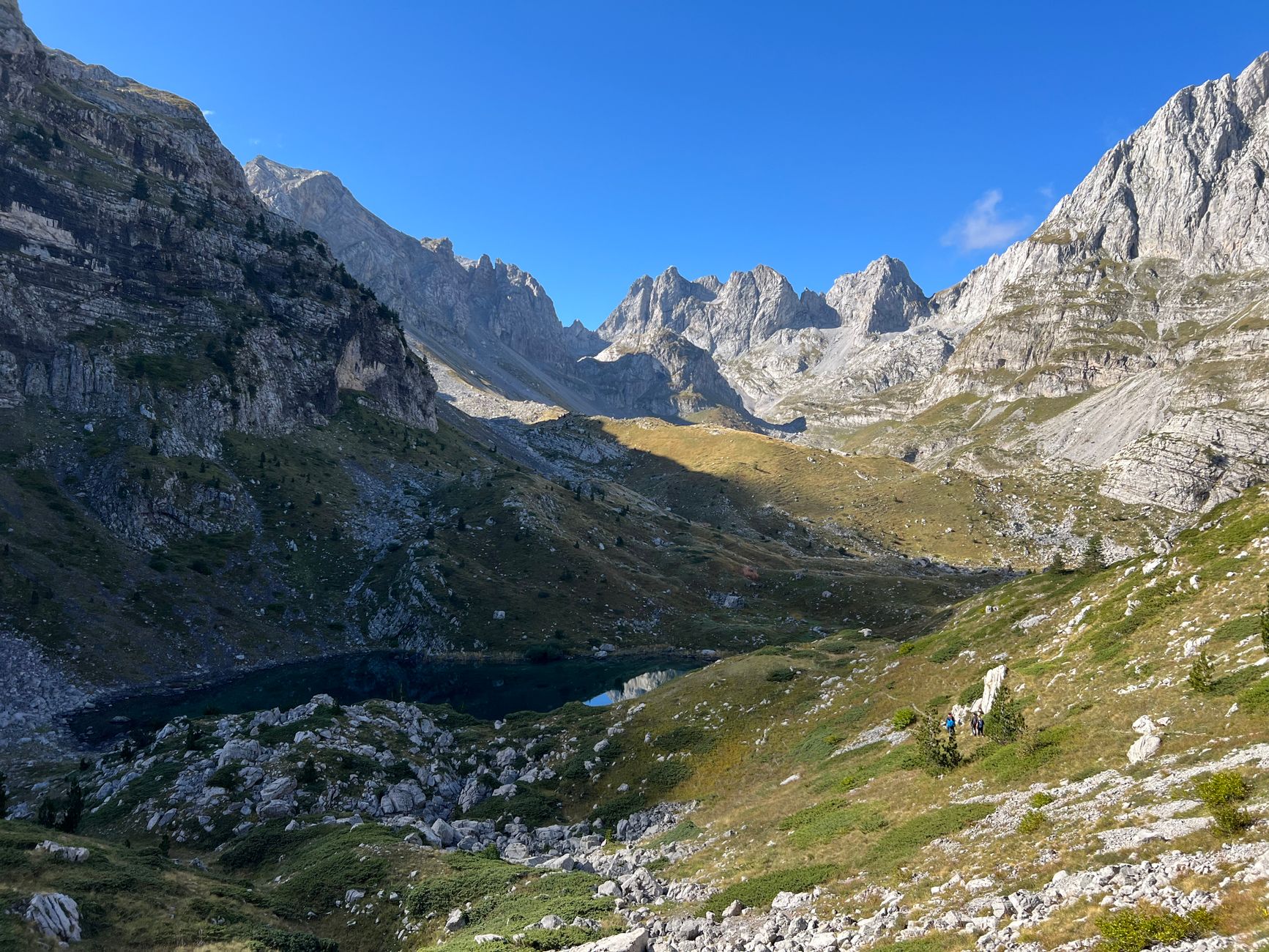
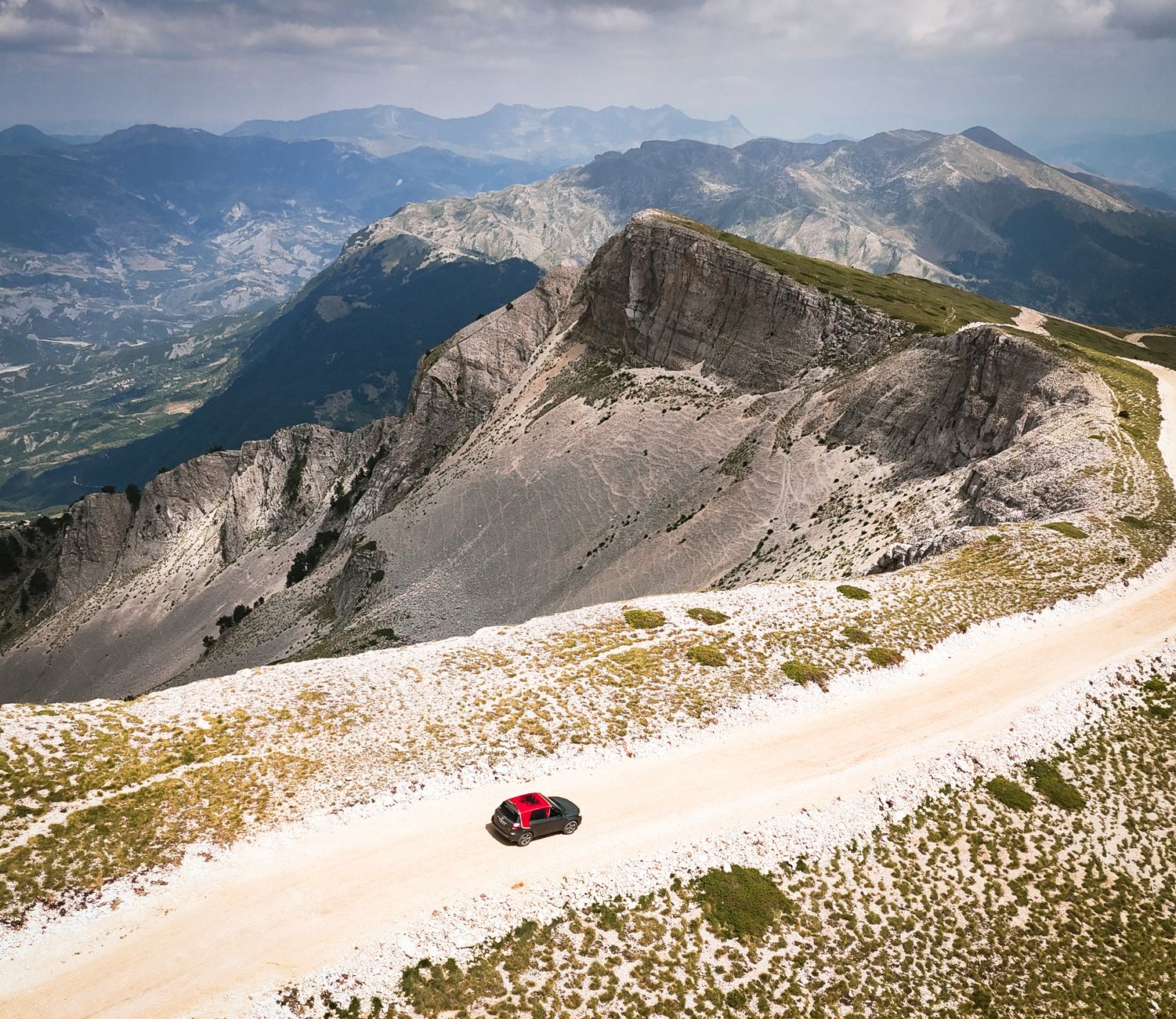
For landscape photographers who dream of dramatic mountain scenery without the crowds of the Alps or Dolomites, the Albanian Alps in the north of the country are a revelation. The Valbona Valley cuts deep into the Accursed Mountains, a range whose name alone suggests the kind of wild, untamed grandeur you will find here. Jagged limestone peaks rise sharply from the valley floor, glacial rivers run crystal clear between banks of rounded boulders, and traditional guesthouses with wooden balconies offer foreground interest that grounds your mountain compositions.
The hike from Valbona to Theth is one of the most celebrated walks in the Balkans, and it doubles as a moving photography experience. You pass through beech forests, cross high mountain passes with 360-degree views, and descend into the Theth valley with its iconic stone church and traditional kulla tower houses. The light at altitude changes rapidly here, with clouds building and dissolving throughout the day, so keep your camera accessible at all times. Early September is particularly magical when the first hints of autumn colour begin to appear in the forest canopy.
- The ferry crossing from Fierza to Valbona through the Koman Lake gorge is itself a world-class photography experience
- Shoot the valley at blue hour for moody mountain silhouettes against a gradient sky
- The Valbona River provides excellent long-exposure opportunities with its clear rushing water
- Traditional guesthouse architecture adds human scale and cultural context to landscape shots
- Autumn (late September to October) brings golden foliage that transforms the valley
The Koman Lake ferry journey through the gorge is often described as one of Europe's most scenic boat rides. Position yourself at the bow of the boat and use a polarising filter to cut through any surface glare on the water. The reflections of the cliff walls in the still sections of the lake are extraordinary.
Theth Village and the Blue Eye Springs

Theth is one of those places that photographers talk about in hushed, reverent tones. This remote mountain village in the Albanian Alps sits in a valley so green and so perfectly framed by peaks that it feels almost theatrical. The centrepiece is the small stone church with its distinctive square bell tower, which sits in the middle of the valley floor and has become one of the most recognisable images in Albanian travel photography. Pair it with the surrounding meadows in spring when wildflowers are in bloom, and you have a composition that belongs in a gallery.
The Blue Eye spring near Saranda, known locally as Syri i Kaltër, is an entirely different kind of photographic subject but no less compelling. This natural karst spring pushes water upward from an unknown depth, creating a mesmerising circular pool of electric blue surrounded by rings of turquoise and green. The colours are so vivid that many photographers assume post-processing is involved, but this is exactly what the eye sees. Shooting here requires a polarising filter to manage reflections and a willingness to experiment with angles, since the pool is relatively small and positioning matters enormously.
- Theth church is best photographed from the hillside above the valley for full context
- The Lock-in Tower in Theth adds historical narrative to your village photography
- Blue Eye spring colours are most saturated in midday light despite the usual advice to avoid it
- A polarising filter is essential equipment at Blue Eye to reduce surface reflections
- The forest surrounding Blue Eye creates beautiful dappled light opportunities in the morning
At Theth, wake up before sunrise and walk to the small wooden bridge over the Shala River. From here you can capture the church with the mist rising from the meadows and the first light catching the mountain peaks behind. This is genuinely one of the most beautiful dawn photography moments available anywhere in the Balkans.
Butrint National Park and Lake Ohrid Border Region
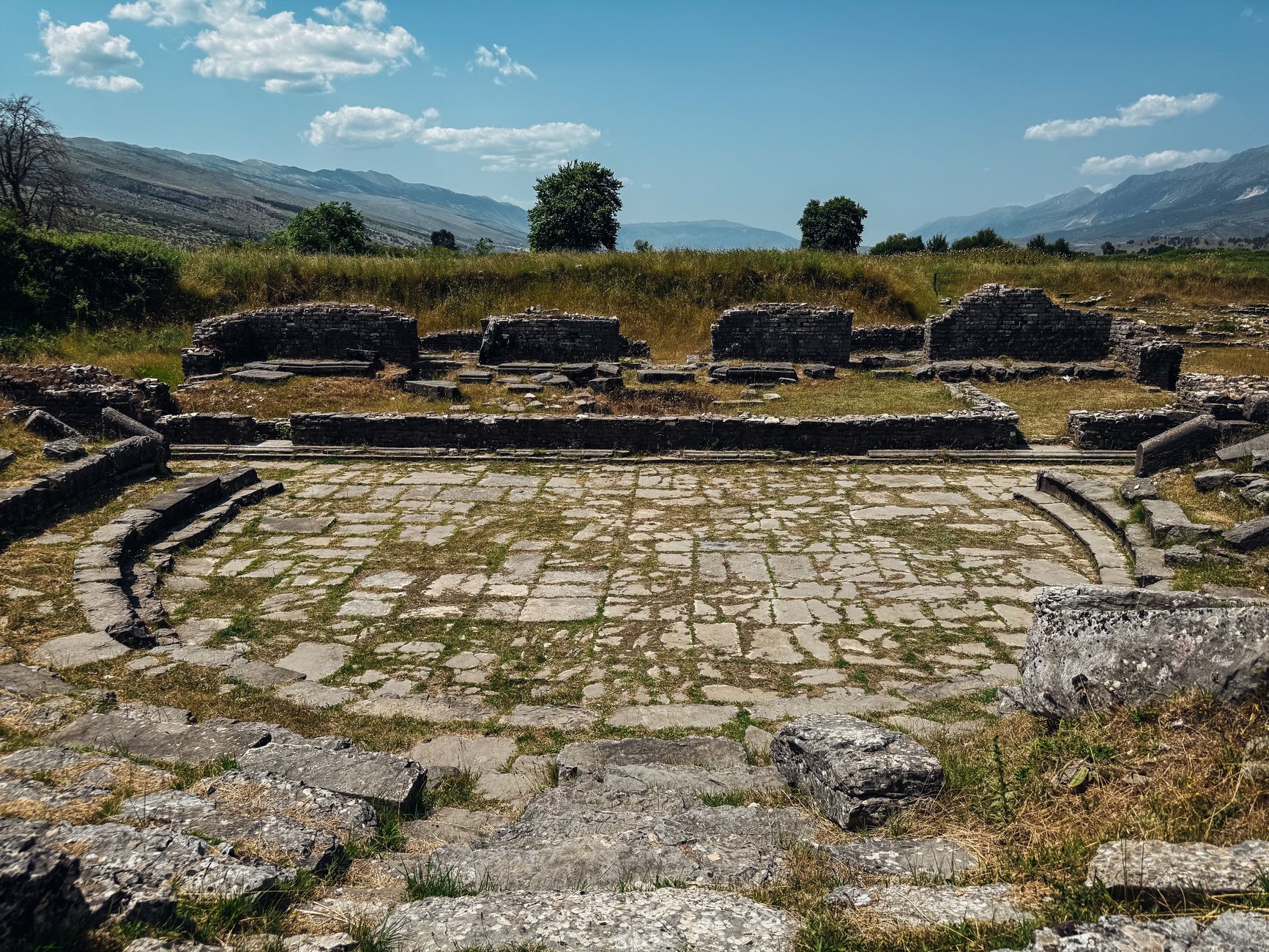
Butrint is Albania's most important archaeological site and one of the most atmospheric places to photograph in the entire country. This ancient city, which has been inhabited since at least the 7th century BC and passed through Greek, Roman, Byzantine, Venetian, and Ottoman hands, sits on a wooded peninsula surrounded by a lagoon and the Vivari Channel. The combination of ancient stone ruins half-swallowed by subtropical vegetation, the shimmering water visible through the trees, and the layered history embedded in every wall creates a photographic environment unlike anything else in Europe.
The site is best explored in the early morning when the light filters through the trees and the tour groups have not yet arrived. The Roman theatre, the baptistery with its extraordinary mosaic floor, the Venetian tower, and the Lion Gate each offer distinct compositional possibilities. Use the tree canopy as a natural frame and look for the interplay between ancient stone and living vegetation. The walk along the lagoon edge at golden hour, with the ruins reflected in the still water, is one of the most quietly beautiful photography experiences Albania offers.
- Arrive at Butrint at opening time to have the ruins in soft morning light without crowds
- The baptistery mosaic floor is best photographed from the elevated viewing platform
- Use the Venetian tower as a foreground anchor with the lagoon stretching behind
- The boat crossing to reach the site adds a travel photography moment in itself
- Long lenses work well here to isolate architectural details against blurred vegetation
Butrint sits within a national park, and the surrounding wetlands are rich in birdlife. If you carry a telephoto lens, arrive very early and spend time near the lagoon edge before entering the ruins. Herons, egrets, and kingfishers are regularly seen here and add a wildlife photography dimension to your visit.
Tirana Street Photography and Urban Colour
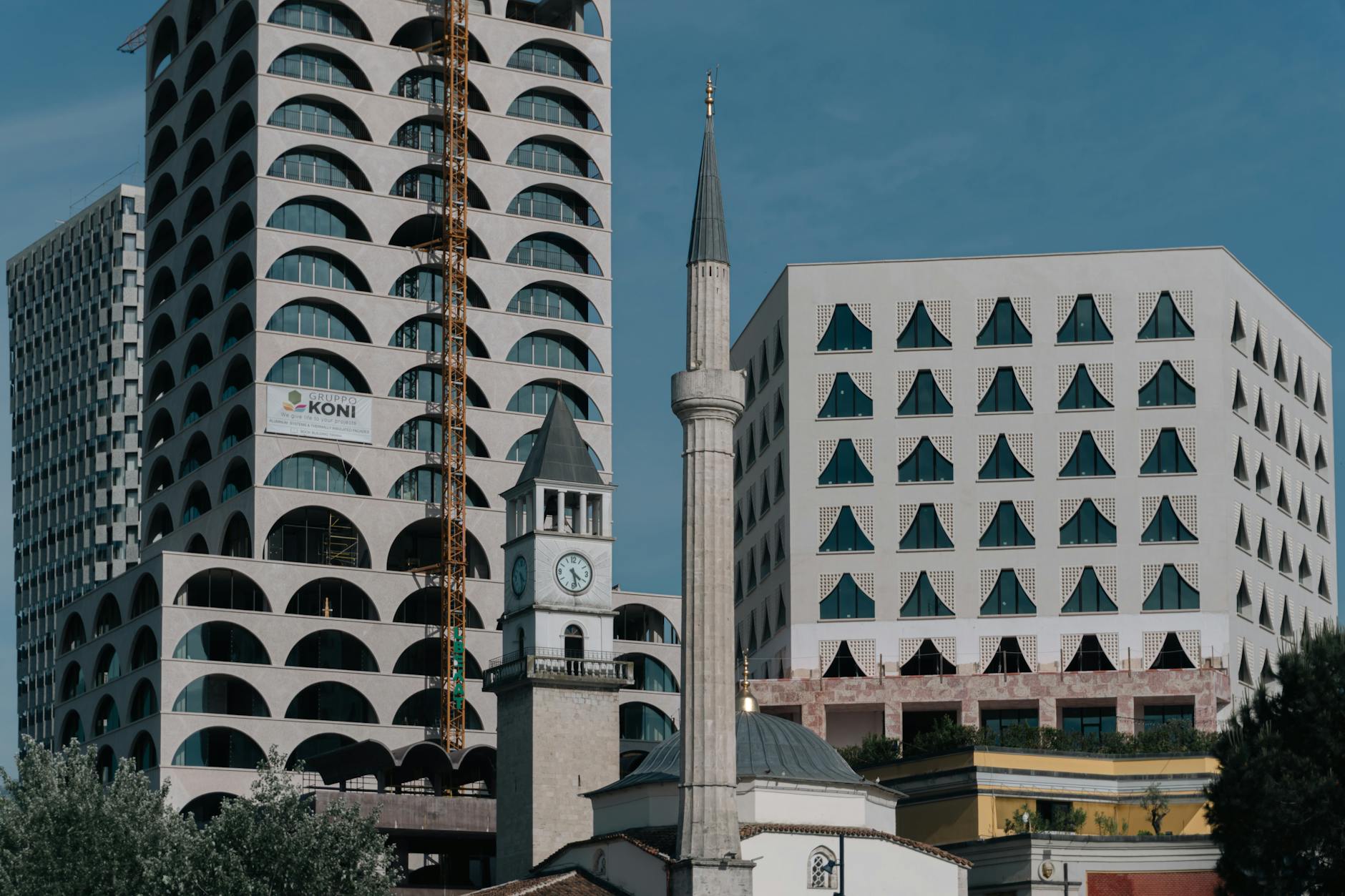
Tirana is not the obvious choice for a photography pilgrimage, but the Albanian capital has a visual personality that rewards those who look closely. The city centre is famously colourful, with apartment blocks painted in vivid geometric patterns that create abstract urban compositions when shot with a telephoto lens from across the street. The area around Skanderbeg Square mixes Ottoman mosques, communist-era public buildings, and modern architecture in a way that tells the story of Albania's turbulent twentieth century in visual shorthand.
The Blloku neighbourhood, once the exclusive enclave of the communist elite and now the city's trendiest district, is full of street art, independent cafes, and fashionable locals who make compelling street photography subjects. The National History Museum facade, covered in an enormous socialist-realist mosaic, is one of the most striking single walls in the Balkans and deserves careful compositional attention. Tirana also has excellent markets, particularly the New Bazaar, where vendors of fresh produce, spices, and traditional crafts create a riot of colour and human activity that street photographers will find endlessly rewarding.
- The coloured apartment blocks near the centre are best shot with a 70-200mm lens for compression
- Skanderbeg Square at blue hour offers a mix of illuminated landmarks and ambient street light
- The National History Museum mosaic facade is best in flat overcast light that reveals all colours evenly
- Blloku street art changes regularly, so every visit offers new walls to discover
- The New Bazaar morning rush between 7am and 9am is peak time for market photography
For the most striking shot of Tirana's coloured buildings, find a high vantage point such as the Sky Tower observation area and use a long lens to compress the layers of coloured facades into a flat, abstract pattern. This approach transforms what might look chaotic at street level into a bold, graphic composition.
Shkodra, the Accursed Mountains Gateway, and Lake Shkoder

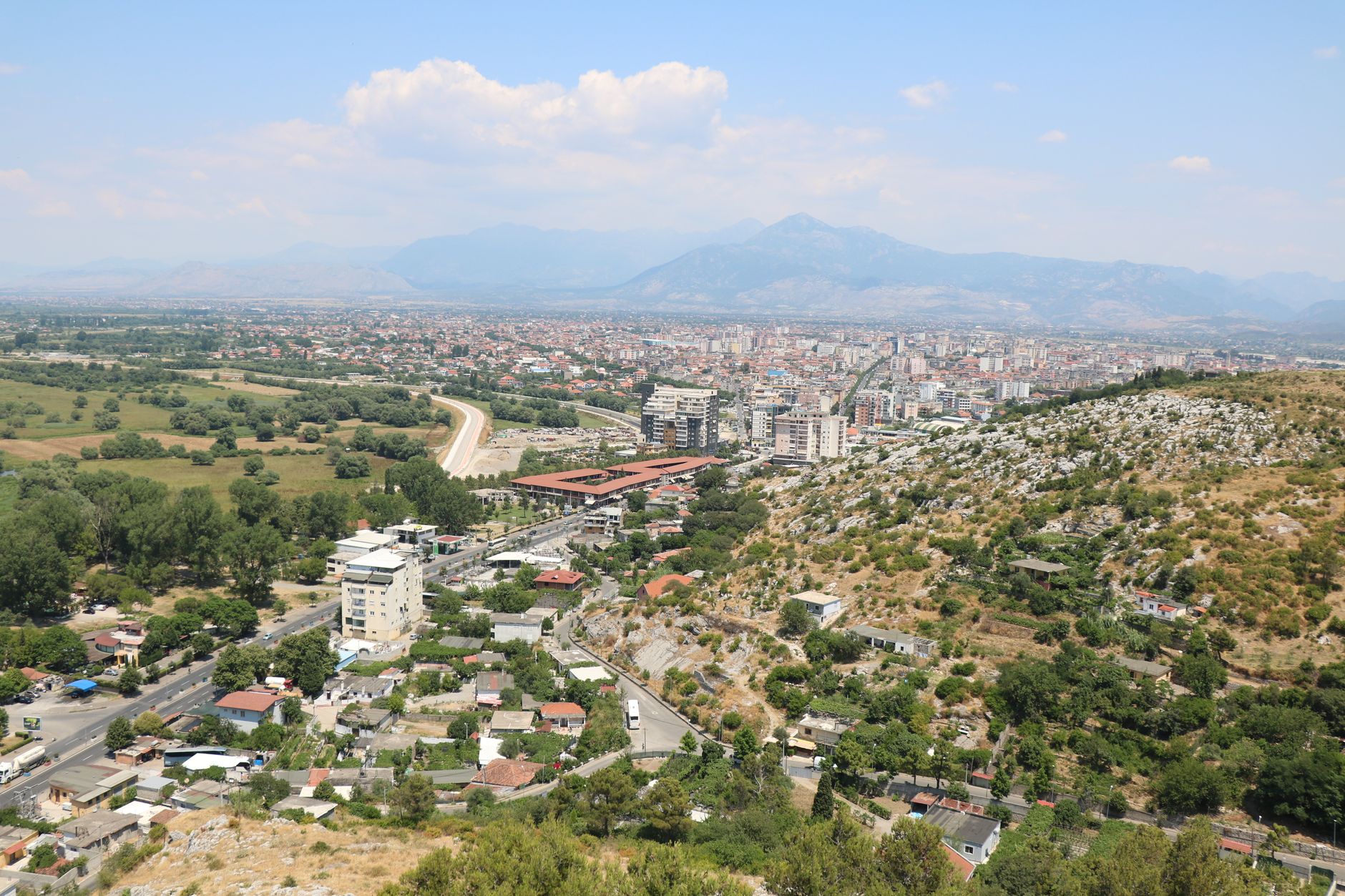
Shkodra in northern Albania is a city with a strong visual identity shaped by its position at the meeting point of the Drin and Buna rivers, the vast expanse of Lake Shkoder, and the imposing Rozafa Castle perched on a rocky hill above the water. The castle is the defining photographic subject here, and it rewards multiple visits at different times of day. At sunrise, the castle silhouette against a pink and orange sky with the lake below is a classic Albanian image. At dusk, the warm light turns the stone walls golden while the lake surface reflects the colours of the sky.
Lake Shkoder itself, shared with Montenegro, is the largest lake in the Balkans and offers wide, contemplative landscape photography with the Dinaric Alps visible in the distance on clear days. Fishing boats moored along the shore, traditional wooden structures, and the occasional fisherman casting nets provide foreground interest and human scale. The city of Shkodra is also known as a centre of Albanian cycling culture, and the wide boulevards and relaxed pace of life make it an excellent place for candid street photography that captures everyday Albanian life in an authentic and unhurried way.
- Rozafa Castle at sunrise is the signature shot of northern Albania
- The lake is best photographed in calm morning conditions for mirror-like reflections
- Fishing boats along the Buna River bank offer traditional lifestyle photography subjects
- The old pedestrian street in Shkodra city centre is excellent for evening street photography
- Clear winter days offer the best visibility of the distant Dinaric Alps from the lake shore
For a truly unique perspective on Rozafa Castle, rent a small boat or kayak on the lake and photograph the castle from the water. This angle, with the castle reflected in the foreground water and the mountains behind, is rarely seen in travel photography and will immediately set your Albanian images apart.
Albania Photography Hotspots: Quick Comparison Guide
| Location | Best Photography Type | Best Season | Crowd Level | Accessibility |
|---|---|---|---|---|
| Berat Old Town | Architecture, Street | April-June, Sept-Oct | Moderate | Easy, well-connected by bus |
| Gjirokastra | Architecture, Landscape | April-June, Sept-Oct | Low-Moderate | Easy, regular transport links |
| Ksamil Beach | Coastal, Seascape | May-June, September | High in July-Aug | Easy, near Saranda |
| Valbona Valley | Mountain Landscape | June-October | Low | Requires ferry and planning |
| Theth Village | Landscape, Cultural | June-September | Low | Remote, rough road access |
| Butrint National Park | Archaeological, Nature | April-June, Sept-Oct | Low-Moderate | Easy, near Saranda |
| Tirana | Street, Urban | Year-round | Low | Very easy, capital city |
| Rozafa Castle, Shkodra | Architecture, Landscape | April-October | Low | Easy, near city centre |
Frequently Asked Questions
When is the best time of year to visit Albania for photography?
The sweet spots for photography in Albania are April through June and September through October. During these shoulder seasons you get softer, more directional light, fewer tourists in your frames, and more comfortable temperatures for carrying camera gear. Spring brings wildflowers and lush green landscapes, while autumn offers golden foliage in the mountain regions. Summer (July to August) is peak season on the coast, which means more crowds but also dramatic sunsets and long golden hours. Winter can be magical in the mountain villages and old towns, with snow transforming familiar scenes, though some mountain roads become inaccessible.
Do you need any special permits to photograph in Albania?
For general travel photography in public spaces, streets, markets, and natural landscapes, no permits are required in Albania. Some archaeological sites like Butrint charge an entry fee that covers photography. Military installations, certain government buildings, and some religious sites may restrict photography, so always look for posted signs and ask permission when in doubt. When photographing people, especially in rural communities, it is respectful and often appreciated to ask first. Albanians are generally very welcoming and happy to be photographed once you have made a friendly connection.
What camera equipment should you bring to Albania?
Albania's photographic diversity means a versatile kit serves you best. A wide-angle lens (16-35mm equivalent) handles landscapes, architecture, and interiors beautifully. A standard zoom (24-70mm) covers street and travel photography. A telephoto (70-200mm) is invaluable for compressing mountain scenes, isolating architectural details, and wildlife at Butrint. A polarising filter is essential for the coast and Blue Eye spring. A sturdy tripod opens up long-exposure possibilities for waterfalls, rivers, and blue-hour cityscapes. If you are heading into the mountains, a weatherproof camera body or protective cover is wise as afternoon thunderstorms are common in summer.
Is Albania safe for photographers carrying expensive camera equipment?
Albania is generally a safe destination for photographers. Petty theft exists as in any country, but violent crime against tourists is rare. Exercise the same sensible precautions you would anywhere: do not leave gear unattended in vehicles, be aware of your surroundings in crowded markets, and use a discreet camera bag rather than obviously branded equipment cases. In rural and mountain areas, the communities are extremely hospitable and you are unlikely to encounter any security concerns at all. The main risks in remote mountain areas are weather-related rather than crime-related, so always inform someone of your plans when hiking to remote photography locations.
How easy is it to get around Albania to visit photography locations?
Getting around Albania requires some planning but is very manageable. The main cities and coastal towns are connected by a network of minibuses called furgons, which are inexpensive and frequent. Renting a car gives you the most flexibility, especially for reaching remote locations like Theth, Valbona, and the more secluded Riviera coves. Mountain roads can be rough and some require a vehicle with reasonable ground clearance. The Koman Lake to Valbona ferry is a fixed schedule service that requires advance planning. Tirana, Shkodra, Berat, Gjirokastra, and Saranda are all accessible by public transport and make excellent base camps for day trips to surrounding photography locations.
What makes Albania different from other Balkan photography destinations?
Albania stands apart from its neighbours in several important ways for photographers. First, it remains genuinely undiscovered compared to Croatia, Montenegro, or Slovenia, which means fewer tourists in your frames and more authentic scenes of everyday life. Second, the sheer variety of subjects within a small area is remarkable: you can shoot Ottoman architecture, Illyrian ruins, Byzantine churches, communist-era murals, dramatic mountains, and pristine beaches all within a few days of driving. Third, Albania is extremely affordable, allowing photographers to extend their stay and revisit locations at different times of day or in different weather conditions without budget pressure. Finally, the Albanian people are famously hospitable, which makes human-interest and portrait photography particularly rewarding.
Plan your Albania adventure
Albania is not just a photography destination, it is a photography revelation. In a continent where the most scenic spots are often so saturated with visitors that capturing an uncluttered frame feels like a victory, Albania offers something increasingly rare: genuine visual discovery. From the thousand-windowed hillsides of Berat to the electric blue depths of the Syri i Kaltër spring, from the glacial grandeur of Valbona to the ancient stones of Butrint half-swallowed by forest, every one of these twelve locations will push your photography in new directions and fill your memory cards with images you will be proud to share. The country rewards patience, early mornings, and a willingness to wander off the obvious path, and it gives back far more than you invest.
So start planning your Albanian photography adventure now. Choose a base or two, build a loose itinerary that allows for spontaneous detours, and give yourself enough time to return to your favourite spots in different light. Albania's photographic riches are not going anywhere, but the window of relative solitude and discovery that makes this country so special for photographers is one that early visitors are privileged to enjoy. Pack your gear, charge your batteries, and get ready to fall completely in love with one of Europe's most beautiful and least photographed countries. Albania is waiting, and it looks absolutely incredible through a lens.