Trekking Legally in Albanian National Parks: The Ultimate Guide



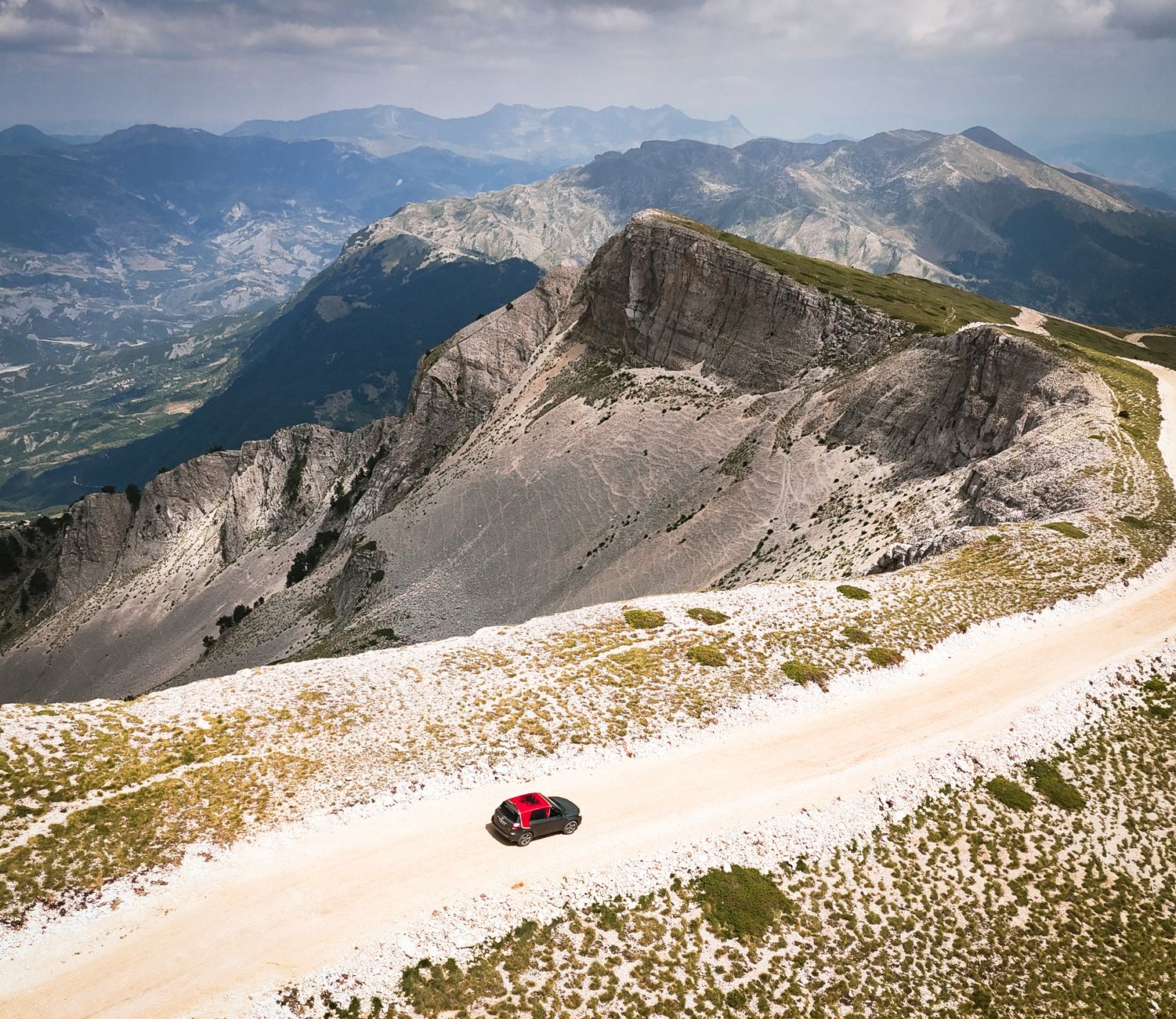
Imagine standing on a ridge in the Albanian Alps, the jagged peaks of the Accursed Mountains stretching endlessly before you, not another soul in sight. Or picture yourself winding through the ancient beech forests of Theth National Park, listening to nothing but the rush of a glacial river below. Albania's national parks deliver this kind of raw, unfiltered wilderness experience, and they do it without the crowds that plague so many of Europe's other great hiking destinations. The country is a trekker's secret, and that secret is slowly getting out.
But with growing visitor numbers comes growing responsibility. Albania has made significant strides in recent years to formalize its national park systems, introduce permit requirements, and establish guidelines that protect both the environment and the hikers who explore it. Trekking without the right paperwork, the wrong gear, or without understanding local regulations can land you in trouble, or worse, put you in genuine danger in terrain that can turn hostile without warning. The good news is that navigating the system is far more straightforward than it might seem, and once you understand the framework, you can focus entirely on the adventure ahead.
This guide covers everything you need to know before you set foot on a trail in any of Albania's protected national parks. From the permit process and park-specific rules to the essential gear list and how to find a licensed local guide, consider this your complete roadmap to trekking legally, safely, and responsibly in one of Europe's most exciting outdoor destinations.
Key Takeaways
| Permit Requirement | Most major Albanian national parks now require entry registration or a formal trekking permit, especially for overnight routes. |
|---|---|
| Top Trekking Parks | Theth, Valbona, Llogara, Prespa, and Dajti are among the most popular and regulated parks for hiking. |
| Guide Requirement | Certain high-altitude and cross-border routes legally require a licensed local guide. |
| Essential Gear | Layered clothing, navigation tools, first aid kit, and water purification are non-negotiables in Albanian mountain terrain. |
| Best Season | Late May through September offers the safest and most accessible trekking windows across most parks. |
| Leave No Trace | Albania's parks enforce strict waste management rules; carry out everything you carry in. |
Understanding Albania's National Park System

Albania currently has fifteen designated national parks, together covering roughly 200,000 hectares of diverse terrain that ranges from alpine meadows and glacial valleys to coastal cliffs and lowland wetlands. Each park falls under the jurisdiction of the Albanian Agency for Protected Areas, known locally as AKZM, which sets the overarching rules for access, conservation, and visitor management. While the system has historically been loosely enforced, a wave of investment and reform over the past decade has brought it much closer in line with European Union conservation standards.
The parks are divided into different protection zones. Core zones are strictly off-limits to casual visitors and require special scientific permits to enter. Buffer zones allow regulated hiking and, in some cases, camping. Transition zones often include local villages and guesthouses that form the backbone of community-based tourism. Understanding which zone your planned route passes through is the very first step in planning a legal trek.
The five parks you are most likely to visit as a trekker are Theth National Park and Valbona Valley National Park in the Albanian Alps, Llogara National Park along the Riviera, Prespa National Park in the southeast, and Dajti National Park just outside the capital Tirana. Each has its own character, difficulty level, and set of regulations, so it pays to research your chosen park specifically rather than assuming the rules are uniform across the board.
- Albania has 15 national parks covering approximately 200,000 hectares.
- Parks are managed by AKZM, the Albanian Agency for Protected Areas.
- Protection zones range from strictly restricted core areas to accessible buffer and transition zones.
- Rules and permit requirements vary significantly from park to park.
- Community-based tourism in transition zones supports local families and is encouraged.
Download the official AKZM park maps before you travel, as mobile data can be unreliable in remote mountain areas and offline maps are invaluable on the trail.
How to Obtain Trekking Permits in Albanian National Parks

The permit landscape in Albania has changed considerably in recent years, and it continues to evolve. As of the most recent updates, day hikers on well-established trails in parks like Dajti and Llogara do not require a formal permit, but they are strongly encouraged to register their visit at the park entrance or ranger station. This registration is free, takes only a few minutes, and serves an important safety function: if you do not return by a given time, rangers know to look for you.
For overnight trekking, particularly on multi-day routes like the famous Peaks of the Balkans trail that passes through Theth and Valbona, a formal permit is now required. You can obtain this permit either in person at the park administration office in the nearest town, or increasingly through an online portal managed by AKZM. The fee is modest, typically ranging from 500 to 1,500 Albanian lek per person per night depending on the park and the season, and the process is generally straightforward for anyone who plans ahead.
Cross-border routes, such as the sections of the Peaks of the Balkans trail that cross into Kosovo or Montenegro, require additional documentation. You will need to present your standard passport, your Albanian trekking permit, and in some cases a letter of intent that your guide or local guesthouse can help you prepare. Border crossings on these mountain routes are official but small, and the rangers there are accustomed to trekkers, so as long as your paperwork is in order the process is smooth.
One common mistake visitors make is assuming that booking a guesthouse inside the park automatically covers their permit requirements. It does not. Your accommodation and your trekking permit are two separate things. Always confirm your permit status directly with the park administration before you set out.
- Day hikers on established trails should register at park entrances even when a formal permit is not required.
- Overnight trekking requires a paid permit obtainable at park offices or through the AKZM online portal.
- Permit fees range from approximately 500 to 1,500 lek per person per night.
- Cross-border routes require your passport plus additional documentation.
- Accommodation bookings do not substitute for trekking permits.
- Carry printed or downloaded copies of your permit as mobile signal is unreliable in the mountains.
Apply for your overnight permit at least 72 hours in advance during peak season (July and August), as popular routes like the Valbona to Theth crossing can reach daily capacity limits.
When and Why You Need a Licensed Guide

Not every trek in Albania requires a professional guide, but knowing when one is legally required and when one is simply strongly advisable could make the difference between a great adventure and a dangerous situation. Albania's mountain terrain is genuinely serious. The Albanian Alps in particular feature steep, unmarked trails, rapidly changing weather, and very limited rescue infrastructure. The country's mountain rescue services are improving but are still far less resourced than those you might find in the Alps or the Pyrenees.
Legally, a licensed guide is required for all treks that enter core protection zones, all cross-border mountain routes, and any organized group trek of more than ten people within a national park. Solo trekkers on unmarked or non-designated trails are also technically required to be accompanied by a licensed guide, though enforcement varies. If you are caught trekking illegally in a restricted zone without a guide, fines can range from 10,000 to 50,000 lek, and you may be escorted out of the park.
Beyond the legal requirements, there are compelling practical reasons to hire a local guide even on routes where it is not mandatory. Local guides carry intimate knowledge of trail conditions, weather patterns, water sources, and emergency shelters. They speak the language, which matters enormously in remote villages where English is rarely spoken. They also support the local economy directly, which is one of the most meaningful contributions you can make as a visitor to these communities.
To hire a legally licensed guide, look for individuals who are registered with the Albanian Mountain Guide Association or who can present a current certification from AKZM. Your guesthouse or local park office can usually make a direct recommendation, and this is often the most reliable route to finding someone trustworthy.
- Licensed guides are legally required for core zone access, cross-border routes, and groups over ten people.
- Solo trekkers on unmarked trails are technically required to hire a guide.
- Fines for illegal trekking in restricted zones range from 10,000 to 50,000 lek.
- Local guides provide critical knowledge of weather, water, and emergency resources.
- Verify guide credentials through AKZM registration or the Albanian Mountain Guide Association.
- Your guesthouse is often the best starting point for finding a reliable, certified guide.
Ask your guide to walk you through the day's route on a physical map before you set out each morning. This habit builds your own navigation skills and ensures you both have a shared understanding of the plan.
Essential Gear for Trekking in Albanian National Parks

Albania's mountains are beautiful, but they demand respect. Conditions can shift from warm sunshine to freezing rain within a single afternoon, particularly at altitude. The Albanian Alps regularly see snow as late as June and as early as September, and afternoon thunderstorms are a reliable feature of the summer months. Coming prepared with the right gear is not optional; it is a basic safety requirement, and in some parks, rangers at entry points will turn you back if you appear under-equipped for the conditions.
Your clothing system should be built around layers. Start with a moisture-wicking base layer, add an insulating mid-layer such as a fleece or down jacket, and always carry a waterproof and windproof outer shell. Even on a clear summer day, pack your rain gear. Footwear should be sturdy, waterproof hiking boots with ankle support. Trails in parks like Theth and Valbona involve significant elevation gain, loose rock, and river crossings, so trail runners are generally not suitable for anything beyond the easiest routes.
Navigation tools are essential. While some of the more popular routes now have basic trail markers, many trails in Albanian national parks are still poorly signed or completely unmarked. Carry a detailed topographic map of your specific route, a compass, and a GPS device or phone loaded with offline maps. Do not rely solely on your phone's GPS, as batteries drain quickly in cold conditions and screens are difficult to read in bright sunlight.
Your pack should also include a comprehensive first aid kit, a water purification system such as a filter or purification tablets, at least two liters of water capacity, high-energy snacks, a headlamp with spare batteries, an emergency bivouac bag, a whistle, and a fully charged power bank. If you are trekking in bear country, which includes parts of the Albanian Alps, a bear canister for food storage is strongly recommended.
- Layer your clothing: moisture-wicking base, insulating mid-layer, waterproof outer shell.
- Wear waterproof hiking boots with ankle support; trail runners are insufficient for most routes.
- Carry a topographic map, compass, and GPS device with offline maps loaded.
- Pack a full first aid kit, water purification system, and emergency bivouac bag.
- Bring a headlamp, whistle, and fully charged power bank.
- In the Albanian Alps, use a bear canister for food storage at overnight camps.
- Always carry more water than you think you need; mountain springs are not always reliable.
Rent trekking poles from guesthouses in Theth or Valbona if you do not want to fly with them. The steep descents on the main alpine routes are significantly easier on your knees with poles.
Park-Specific Rules and Environmental Regulations
Every national park in Albania has its own set of regulations, and familiarizing yourself with the specific rules of your destination park is a legal and ethical obligation. That said, there are several rules that apply universally across all of Albania's protected areas, and understanding these gives you a solid baseline before you dig into park-specific details.
Camping is only permitted in designated camping zones or with explicit written permission from the park administration. Wild camping outside of these zones is illegal and can result in significant fines. Fires are prohibited in most parks during the dry summer months, and in some parks they are banned year-round outside of designated fire pits. Always check the current fire status with the park office before your trip, as conditions change seasonally. Collecting plants, rocks, fossils, or any natural materials is strictly forbidden in all national parks.
Wildlife disturbance is taken seriously. Albania is home to brown bears, wolves, lynx, golden eagles, and a remarkable diversity of bird species. Approaching wildlife, feeding animals, or disturbing nesting sites is illegal and can result in criminal charges, not just fines. If you encounter a bear on the trail, make noise to alert it to your presence, back away slowly, and never run. Your guide will brief you on current wildlife activity in the area before you set out.
Waste management is perhaps the single most important environmental rule you will encounter. Albania's parks have invested in waste collection infrastructure, but it is still limited in remote areas. The rule is simple: if you carried it in, you carry it out. This applies to food scraps, packaging, hygiene products, and anything else that did not exist on the trail before you arrived. Several parks now conduct spot checks and issue on-the-spot fines for littering.
Drone and Photography Regulations
If you plan to fly a drone in any Albanian national park, be aware that this requires two separate permits: one from the Albanian Civil Aviation Authority and one from the specific park administration. Applications must be submitted in advance, and approval is not guaranteed, particularly in core protection zones or near wildlife habitats. Commercial photography and filming require additional licensing. Personal photography without a drone is always permitted and encouraged.
- Camping is only legal in designated zones or with written park administration permission.
- Open fires are banned in most parks during summer and in some parks year-round.
- Collecting any natural materials including plants, rocks, and fossils is strictly forbidden.
- Wildlife disturbance and feeding animals is illegal and can result in criminal charges.
- All waste must be carried out; spot-check fines for littering are actively enforced.
- Drone use requires a separate permit from the Civil Aviation Authority and park administration.
Pack a small, lightweight dry bag specifically for your rubbish. It keeps waste contained and odor-free, and it makes the carry-out rule easy to follow without thinking about it.
Safety, Emergency Protocols, and Mountain Rescue

Albania's mountain rescue infrastructure has improved significantly in recent years, but it still lags behind what most Western European trekkers might be accustomed to. Response times in remote areas can be several hours, and helicopter rescue is only available in a limited number of scenarios. This reality should inform every decision you make on the trail, from your route choice and daily start time to your gear selection and turnaround criteria.
Before every trek, share your detailed itinerary with someone who is not on the trail with you. This should include your planned route, expected daily campsites, and a clear return date. If you do not make contact by a specified time, that person should know to alert the park rangers. This simple protocol has saved lives in Albanian mountain terrain and costs you nothing but a few minutes of preparation.
The emergency number in Albania is 112, which connects to police, ambulance, and fire services. However, in remote mountain areas, mobile signal is often absent or extremely weak. Many experienced trekkers in the Albanian Alps carry a satellite communicator for this reason. If you are trekking with a guide, confirm that they carry emergency communication equipment and know the location of the nearest ranger station and emergency shelter.
Altitude sickness is a genuine risk on routes that take you above 2,000 meters, which includes several peaks in the Albanian Alps. Symptoms include headache, nausea, dizziness, and fatigue. The only effective treatment is descent. Do not push through altitude sickness symptoms in the hope that they will resolve; descend immediately and seek medical advice. Acclimatize properly by spending at least one night at moderate altitude before attempting high routes.
- Always leave a detailed itinerary with a contact who is not on the trek.
- Albania's emergency number is 112, but signal is unreliable in remote mountain areas.
- Consider carrying a satellite communicator on multi-day alpine routes.
- Confirm your guide carries emergency communication equipment.
- Recognize altitude sickness symptoms and descend immediately if they appear.
- Know the location of the nearest ranger station and emergency shelter on your route.
- Start early each day to avoid afternoon thunderstorms, which are common in summer.
Register your emergency contact details and itinerary with the park ranger station at the trailhead, not just with a friend back home. Rangers can initiate a search far faster than anyone outside the country.
Responsible Tourism and Supporting Local Communities

Trekking legally in Albania's national parks is not just about following rules for their own sake. It is about being part of a system that genuinely works for the long-term benefit of these extraordinary landscapes and the communities that depend on them. When you pay your permit fee, hire a licensed local guide, stay in a family-run guesthouse, and follow Leave No Trace principles, you are directly contributing to a model of sustainable tourism that Albania is working hard to build.
The communities inside and around parks like Theth and Valbona have historically relied on subsistence farming and livestock herding. Trekking tourism has opened up new economic opportunities, but only if it is managed responsibly. Overcrowding, illegal camping, and disrespect for local customs can erode both the environment and the social fabric of these villages. As a visitor, your behavior on and off the trail sends a message about what kind of tourism Albania can expect from international visitors.
Eating at local guesthouses, buying handmade products from village artisans, and learning a few words of Albanian all go a long way toward building the kind of goodwill that makes trekkers genuinely welcome in these communities. Ask your host about local customs before you set out, particularly around dress codes near religious sites and appropriate behavior in traditional households. These small gestures of respect are remembered and appreciated far more than you might expect.
Finally, consider giving feedback to the park administration after your trek. Note trail conditions, signage gaps, or any concerns you observed. Albania's national park system is actively developing, and the input of informed, respectful visitors genuinely influences how the system evolves. You have a role to play, and it extends well beyond the trail itself.
- Permit fees and guide fees directly fund park conservation and local livelihoods.
- Stay in family-run guesthouses to keep tourism revenue within the community.
- Buy locally made products and eat at local establishments whenever possible.
- Learn basic Albanian phrases; even a simple greeting is warmly received.
- Respect dress codes near religious sites and traditional household customs.
- Share constructive feedback with park administration to help improve the system.
Ask your guesthouse host to recommend a local family-run restaurant rather than defaulting to the most visible option. The food will almost certainly be better, and the money stays in the community.
Quick Comparison: Albania's Top Trekking National Parks
| National Park | Permit Required | Guide Required | Best Season | Difficulty Level |
|---|---|---|---|---|
| Theth National Park | Yes, overnight permit required | Recommended; required for restricted zones | June to September | Moderate to Challenging |
| Valbona Valley National Park | Yes, overnight permit required | Required for cross-border routes | June to September | Moderate to Challenging |
| Llogara National Park | Registration recommended | Not required for main trails | April to October | Easy to Moderate |
| Prespa National Park | Registration required | Recommended for wetland zones | May to October | Easy to Moderate |
| Dajti National Park | No permit for day hikes | Not required | Year-round | Easy |
Frequently Asked Questions
Do I need a permit to hike in Albanian national parks?
It depends on the park and the type of trek. Day hikes on established trails in parks like Dajti and Llogara generally do not require a formal permit, but registration at the park entrance is strongly recommended. Overnight trekking in parks like Theth and Valbona requires a paid permit, which you can obtain at the park administration office or through the AKZM online portal. Always check the current requirements for your specific park before you go.
Is it safe to trek alone in Albanian national parks?
Solo trekking is possible on well-marked, lower-altitude routes, but it is not advisable on unmarked trails, high-altitude routes, or in remote areas of the Albanian Alps. Beyond the legal requirement for a guide on certain routes, the practical safety risks of solo trekking in areas with limited rescue infrastructure are significant. At minimum, always register your itinerary with the park ranger station and leave details with a trusted contact.
What is the best time of year to trek in Albanian national parks?
Late May through September is generally the best window for trekking across most Albanian national parks. July and August offer the most stable weather but also the highest visitor numbers on popular routes. June and September are excellent alternatives with fewer crowds and still-reliable conditions. High-altitude routes in the Albanian Alps should be avoided before mid-June due to snow and after mid-October due to early winter conditions.
Can I camp freely in Albanian national parks?
No. Wild camping outside of designated camping zones is illegal in all Albanian national parks and can result in significant fines. You must either camp in a designated area or obtain explicit written permission from the park administration for a specific campsite. Many multi-day trekkers choose to stay in the network of family-run guesthouses along popular routes, which is both legal and a great way to support local communities.
How do I find a licensed guide for trekking in Albania?
The most reliable way to find a licensed guide is through the park administration office or your guesthouse in the nearest village. Ask specifically for guides who are registered with AKZM or the Albanian Mountain Guide Association and request to see their certification. Avoid hiring guides who approach you informally at trailheads without credentials. Your accommodation host is usually your best resource for a trustworthy recommendation.
What happens if I trek without a permit in a restricted area?
Trekking without a required permit in a restricted zone can result in fines ranging from 10,000 to 50,000 Albanian lek, depending on the severity of the violation. You may also be escorted out of the park by rangers. In cases involving core protection zones or cross-border routes, the consequences can be more serious. The permit process is straightforward and inexpensive, so there is no good reason to skip it.
Plan your Albania adventure
Albania's national parks represent some of the last truly wild trekking terrain in Europe, and that wildness is worth protecting. By securing the right permits, packing the gear that the mountains demand, hiring a knowledgeable local guide where required, and following the environmental rules that keep these places intact, you are not just ticking regulatory boxes. You are choosing to be the kind of traveler who leaves a place better than they found it. That choice matters more here than almost anywhere else on the continent, because Albania's wilderness is still fragile enough to be shaped by the decisions individual trekkers make.
The trails are waiting for you. The peaks of the Albanian Alps, the ancient forests of Theth, the mirror-still lakes of Prespa, and the wild coastal ridges of Llogara are all within reach, and they are more accessible than ever for those who take the time to plan properly. Do the paperwork, pack the layers, trust your guide, and walk into these landscapes with the respect they deserve. Albania will reward you with experiences that stay with you long after the mud has been washed off your boots.