Albanian border crossings: Rules, tips & what to know

Albania keeps surprising travelers. Most people picture chaotic Balkan checkpoints, stern officials, and endless paperwork. In reality, crossing into Albania is one of the more straightforward border experiences in Southeast Europe, provided you arrive prepared. This guide walks you through every practical layer: what an Albanian border crossing actually means under Albanian law, which documents you must carry, how road, rail, sea, and air crossings differ, and the most common mistakes that send travelers back the way they came. If you are planning a trip to or through Albania in 2026, this is where to start.
Table of Contents
- What is an Albanian border crossing?
- Documents and requirements: What you need to cross
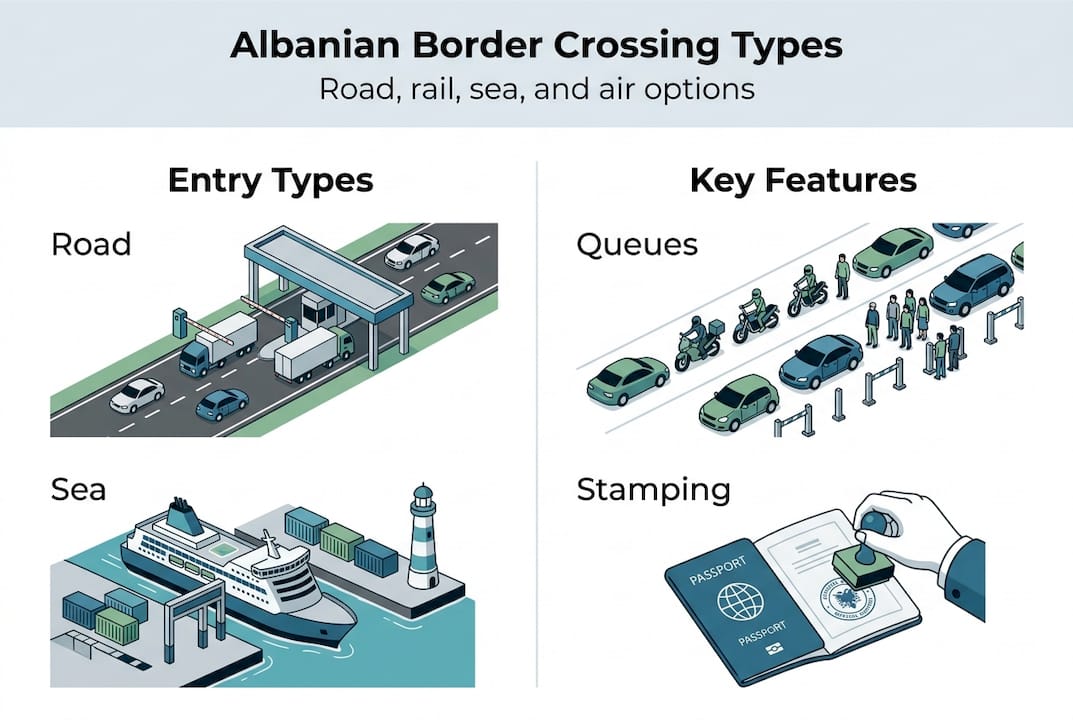
- How different crossings work: Road, rail, sea, and air
- Border crossing pitfalls and real-life scenarios
- Practical tips and resources for a smooth journey
- Our perspective: What most Albania border guides miss
- Plan your trip with expert local resources
- Frequently asked questions
Key Takeaways
| Point | Details |
|---|---|
| Official entry points only | You must enter or exit Albania at authorized crossings with document checks and passport stamps. |
| Valid passport required | Your passport should be valid for at least 3-6 months when crossing into Albania. |
| Insurance matters for drivers | You need a valid Green Card for your car and special authorization if using a rental vehicle. |
| Peak times bring delays | Expect long waits at Greek borders in summer, especially Kakavija; plan travel to avoid busy hours. |
| Visa-free for many travelers | Most Western travelers can enter Albania without a visa for up to 90 days. |
What is an Albanian border crossing?
A border crossing in Albania is more than a gate or a painted line on the road. Under Albanian law, it is a formally designated official point where people, vehicles, and goods may legally enter or exit the country. Only certain locations have this status, which means you cannot simply drive across a remote mountain road and consider yourself legally admitted.
Albanian border crossings are official points regulated by the Border and Migration Police under Law No. 39/2025, allowing entry or exit only at authorized locations with document checks and passport stamps. That law replaced older legislation and reinforced the idea that every foreigner entering Albania must do so at a recognized point, with valid travel documents, and through the full check-in process.
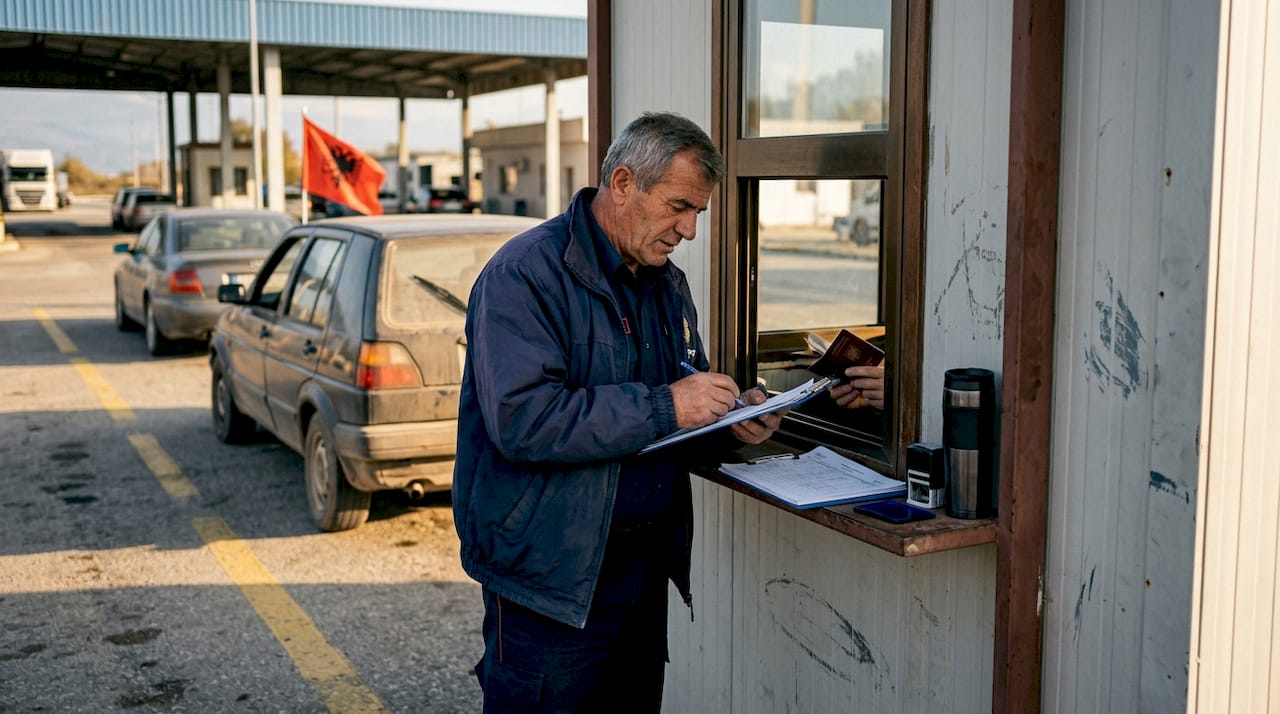
The Border and Migration Police are the authority you deal with in practice. Their officers verify passports, check visas where applicable, stamp entry and exit records, and enforce customs rules. For most tourists, the interaction is brief: present your passport, answer a few routine questions, receive your stamp, and proceed.
Important: No informal border crossings exist in Albanian law. Attempting to cross outside an authorized point is a criminal offense, not a minor violation. Always use official crossings, even if a local or a map app suggests a shortcut.
The stamping process matters more than many travelers realize. Your entry stamp records the date you arrived, which is the baseline for calculating your allowed stay. Without it, you could face complications when you try to leave, or even when you re-enter the Schengen zone. Never skip through without getting that stamp confirmed.
Authorized crossings include road, rail, sea, and air entry points. Each has its own operating hours and procedures. Some smaller road crossings operate only during daylight hours, so timing your arrival matters, especially in mountainous areas near Montenegro or North Macedonia.
Documents and requirements: What you need to cross
Knowing what to carry is half the battle. Albanian border officials follow a clear protocol, and the requirements differ slightly depending on your nationality and how you are traveling.
Passport and visa status by nationality
| Nationality | Visa required? | Max stay |
|---|---|---|
| EU citizens | No | 90 days / 180 days |
| UK citizens | No | 90 days / 180 days |
| US citizens | No | 90 days / 180 days |
| Canada / Australia | No | 90 days / 180 days |
| Balkan neighbors | No (most) | 90 days / 180 days |
| Others | Check embassy | Varies |
Visa-free entry for up to 90 days within any 180-day period applies to EU, UK, US, Canadian, Australian, and most Balkan passport holders. Your passport should ideally have at least 3 to 6 months of validity remaining beyond your planned departure date.
Here is a numbered checklist of what to have ready at the crossing:
- Valid passport (physical document, not just a phone scan)
- Proof of onward travel or accommodation if asked
- Sufficient funds for your stay
- Vehicle insurance documents (Green Card) if driving
- Cash declaration if carrying over 1,000,000 ALL or the equivalent in foreign currency
The cash threshold is easy to overlook. You must declare amounts exceeding roughly €10,000 or the equivalent. Failing to declare is treated as a customs violation, not a technicality, and can result in confiscation.
For drivers, the Green Card is your proof of valid third-party liability insurance recognized across participating countries. Without it, you may be denied entry or required to purchase local coverage on the spot, which costs more and takes time. Always store your essential travel documents together in one folder to avoid scrambling at the checkpoint.
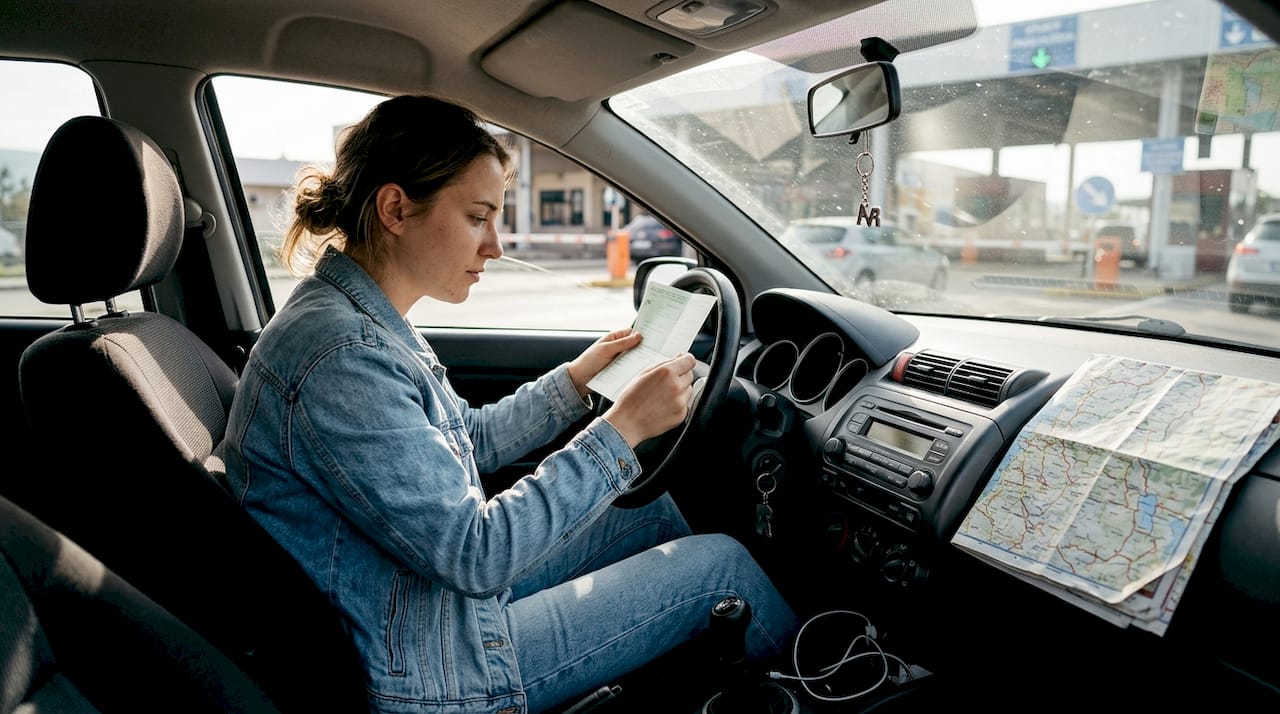
Pro Tip: Check your passport expiry before you book flights, not after. Border officials have turned travelers away because their passport expired within 60 days of their planned exit, even when the document technically covers the entry date.
How different crossings work: Road, rail, sea, and air
The type of crossing you use shapes how long the process takes and what to expect on arrival.
Key Albanian border crossings by type
| Crossing | Type | Connects to | Notes |
|---|---|---|---|
| Kakavija | Road | Greece | Busiest; long queues in summer |
| Morina / Vermice | Road | Kosovo | Most facilitated; fast process |
| Hani i Hotit | Road | Montenegro | Scenic; quieter than Kakavija |
| Blato / Qafë Thanë | Road | North Macedonia | Mountain route; check hours |
| Durrës Port | Sea | Italy, Croatia | Ferry arrivals |
| Tirana Airport | Air | International | Standard passport control |
| Pogradec | Road | North Macedonia | Lake Ohrid route |
Road crossings handle the majority of tourist traffic. Kakavija, connecting Albania and Greece, is the one most people use when driving up from the Greek coast. It can back up significantly on summer Friday afternoons and Sunday evenings. Morina and Vermice, the Kosovo crossings, move faster because procedures there are more streamlined.
Kosovo border procedures are the most facilitated, with buses and shared minivans called furgons crossing routinely throughout the day. If you are visiting both countries, the Albanian-Kosovo crossing is usually the smoothest land experience.
Rail entry is limited. There are no active international passenger rail routes into Albania as of 2026, though regional plans exist. Sea entry through Durrës Port involves a standard customs and passport check after disembarking your ferry. Air arrivals at Tirana International Airport Nënë Tereza follow normal international airport procedures, with dedicated lanes for EU and non-EU passport holders.
Pro Tip: If you are using a rental car, verify with your provider whether cross-border travel is permitted and which specific countries are covered. Read more in the cross-border rental guide before you book.
Border crossing pitfalls and real-life scenarios
Even well-prepared travelers hit unexpected snags. Here are the most common problems and how to avoid them.
- Long queues at Kakavija in peak summer: The Greece-Albania crossing can have waits of two to four hours on busy weekend afternoons. Traveling mid-week or early morning cuts that time dramatically.
- Missing or invalid Green Card: Drivers without valid vehicle insurance documentation matching their car are turned back. Some travelers arrive with insurance that technically covers Albania but does not include the border country they are crossing from. Both legs need to be covered.
- Rental car restrictions: Many rental companies in Greece, North Macedonia, or Montenegro prohibit driving their vehicles into Albania, or vice versa. Using an unauthorized rental vehicle at the border means the car is sent back and you are stranded.
- Protest-related delays: Road closures near border areas caused by demonstrations have affected crossing times in the past. Check embassy alerts before travel days.
- Kosovo insurance gap: While crossing into Kosovo from Albania is smooth, your standard European insurance may not automatically cover Kosovo. Confirm this with your provider before you drive.
A traveler driving a rental from Thessaloniki to Saranda without checking the rental agreement might reach Kakavija and discover the car is marked Greece-only. The fix is simple in advance and expensive in the moment.
For detailed guidance on what to verify before you drive, the car rental border rules page covers current 2026 policies. You can also use the rental checklist to make sure nothing slips through.
Pro Tip: Avoid arriving at any major crossing on Saturday afternoon or Sunday evening, especially from mid-June to late August. Monday mornings and midweek travel windows move significantly faster.
Practical tips and resources for a smooth journey
Pulling everything together: here is what to confirm before you leave home and where to find real-time information.
Before you travel:
- Confirm passport validity is at least 6 months beyond your return date
- Print or save offline copies of visa documentation, insurance, and rental authorization
- Check the Albanian Border and Migration Police website for updated operating hours at smaller crossings
- Verify cash amounts you plan to carry and declare if above the threshold
- Subscribe to your country’s embassy alert system for Albania (the U.S. Embassy Tirana posts timely updates)
On the road:
- Keep documents in one accessible folder, not scattered across luggage
- Have your vehicle registration, Green Card, and rental authorization on top
- Use the car rental checklist as your final pre-departure review
Choosing how to travel:
- Buses and furgons are excellent for Kosovo and North Macedonia routes if you prefer not to drive
- Ferries from Bari or Ancona in Italy arrive at Durrës with minimal stress
- Rental cars give flexibility but require cross-border car rental authorization in writing
Prepared travelers find the process straightforward when they focus on documents and insurance. Official sources confirm routine checks, while real-world experience shows that rental authorization and a valid Green Card prevent the vast majority of problems. Stay current with official border regulations as rules can and do update.
Our perspective: What most Albania border guides miss
Most online guides about Albanian border crossings fall into one of two traps. Either they over-dramatize the experience with outdated stories about lengthy interrogations and missing stamps, or they oversimplify to the point of being useless, saying only “bring your passport and you will be fine.”
Neither serves you well. The honest picture is this: Albania’s borders are among the most consistently reliable in the Balkans for travelers who prepare properly. The legal framework under Law No. 39/2025 is clear. The officials are professional. The real problems we see repeatedly are not about the border itself. They are about travelers assuming their rental car is automatically authorized, or trusting a forum post from 2019 over a current embassy alert.
Our advice is simple. Use official sources first. The Albanian Border and Migration Police website and your country’s embassy alerts give you real-time, legally accurate information. Check the cross-border rental guide if you are driving. And please, check your passport expiry date right now, before you read anything else.
Plan your trip with expert local resources
Albania rewards travelers who do their homework. The border crossing is just one piece of a much richer travel experience waiting on the other side.
Travel Tips Albania brings together practical guidance, destination inspiration, and up-to-date logistics so you can focus on enjoying the trip. Whether you want deep-dive Albania travel tips covering safety, culture, and money, or you are comparing car rental options for 2026 to find the best fit for your itinerary, the site has you covered. From the Albanian Riviera to the Accursed Mountains, every region has its own logistics, and having a trusted local resource in your corner makes all the difference.
Frequently asked questions
Do I need a visa to enter Albania at a border crossing?
Citizens from the EU, UK, US, Canada, Australia, and most Balkan countries can enter Albania visa-free for up to 90 days within any 180-day period. Other nationalities should check with the Albanian embassy in their home country before traveling.
What happens if I try to cross the Albanian border with an expired passport?
Border officials verify passport expiry at every crossing, and travelers with expired or soon-expiring passports will be denied entry and turned back on the spot. Aim for at least 6 months of validity beyond your planned return date.
Are there health checks or quarantine requirements at Albanian borders?
As of 2026, there are no routine health checks or quarantine requirements at Albanian border entry points. Standard passport and document checks apply.
Can I cross into Albania with a rental car?
Yes, but your rental agency must authorize the border crossing in writing, and you need a valid Green Card proving insurance coverage for Albania. Some agencies restrict travel to specific countries, so confirm before you pick up the keys.
What is the busiest border crossing into Albania and when should I avoid it?
Kakavija, the crossing with Greece, is the busiest Albanian border point, with the longest queues occurring during peak summer weekends and public holidays. Traveling mid-week or early in the morning cuts wait times considerably.