How to Travel Albania Entirely by Public Bus


Albania has quietly become one of the most exciting destinations in Europe, and the good news is you do not need a car to see it. The country's public bus system, a patchwork of intercity coaches, minibuses called furgons, and urban city buses, connects nearly every town, village, and coastal resort worth visiting. Yes, it takes a little patience and a willingness to embrace the unexpected, but traveling Albania entirely by public bus is not only possible, it is one of the best ways to experience the country authentically.
Forget expensive rental cars and the stress of Albanian mountain roads. When you travel by bus, you sit back, watch the dramatic landscape roll past your window, and strike up conversations with locals who are almost always eager to help a foreign visitor. Fares are remarkably cheap, often less than a few euros for multi-hour journeys, and the routes cover everything from the buzzing capital Tirana to the UNESCO-listed stone city of Gjirokaster, the Riviera beaches near Saranda, and the highland wilderness around Valbona.
This ultimate guide walks you through everything you need to know: how the system works, which routes to prioritize, how to read a station, what to expect on board, and the insider tips that make the difference between a frustrating missed connection and a seamless adventure. Let's get you on the road.
Key Takeaways
| Average intercity fare | 1 to 5 euros depending on distance |
|---|---|
| Main bus types | Intercity coaches, furgons (minibuses), and city buses |
| Best hub city | Tirana connects to virtually every major destination |
| Ticket buying | Mostly cash at station windows or on board the vehicle |
| Luggage policy | Large bags usually stored underneath for a small tip to the driver |
| Schedules | Morning departures are most frequent; afternoons can be sparse |
| App or website | No single national app; local knowledge and asking around is key |
Understanding How Albania's Bus System Works

Before you board your first bus in Albania, it helps to understand that the system is not a single unified network. Instead, it is a layered ecosystem of different vehicle types and operators that together cover the whole country. At the top level you have larger intercity coaches that run between major cities like Tirana, Durres, Shkoder, Vlora, Saranda, and Gjirokaster. These are usually comfortable, air-conditioned, and run on relatively fixed schedules from dedicated bus stations.
Below that layer you have the furgon, which is arguably the backbone of Albanian public transport. A furgon is a minibus, typically seating eight to fifteen passengers, that operates on a specific route and departs when it is full rather than on a fixed timetable. This departure-when-full system can mean waiting twenty minutes or two hours depending on the route and time of day. Furgons are used heavily for shorter regional connections and for reaching smaller towns that coaches do not serve.
City buses operate within urban areas, particularly in Tirana and Durres, and use a simple flat-fare system. They are useful for getting between bus stations and your accommodation, or for exploring a city without walking everywhere. Understanding which type of vehicle you need for each leg of your journey is the first step to building a smooth itinerary across Albania.
- Intercity coaches: fixed schedules, larger vehicles, main cities only
- Furgons: depart when full, faster on short routes, reach smaller towns
- City buses: flat fare, urban areas, useful for station transfers
- Most stations are informal; look for clusters of vehicles and touts calling destinations
- Tirana's main bus station is outside the city center; budget time to reach it
Always arrive at the station at least 30 minutes before your intended departure, especially for morning furgons. The best seats fill up fast and early birds get the window views.
Planning Your Route: The Key Destinations You Can Reach by Bus
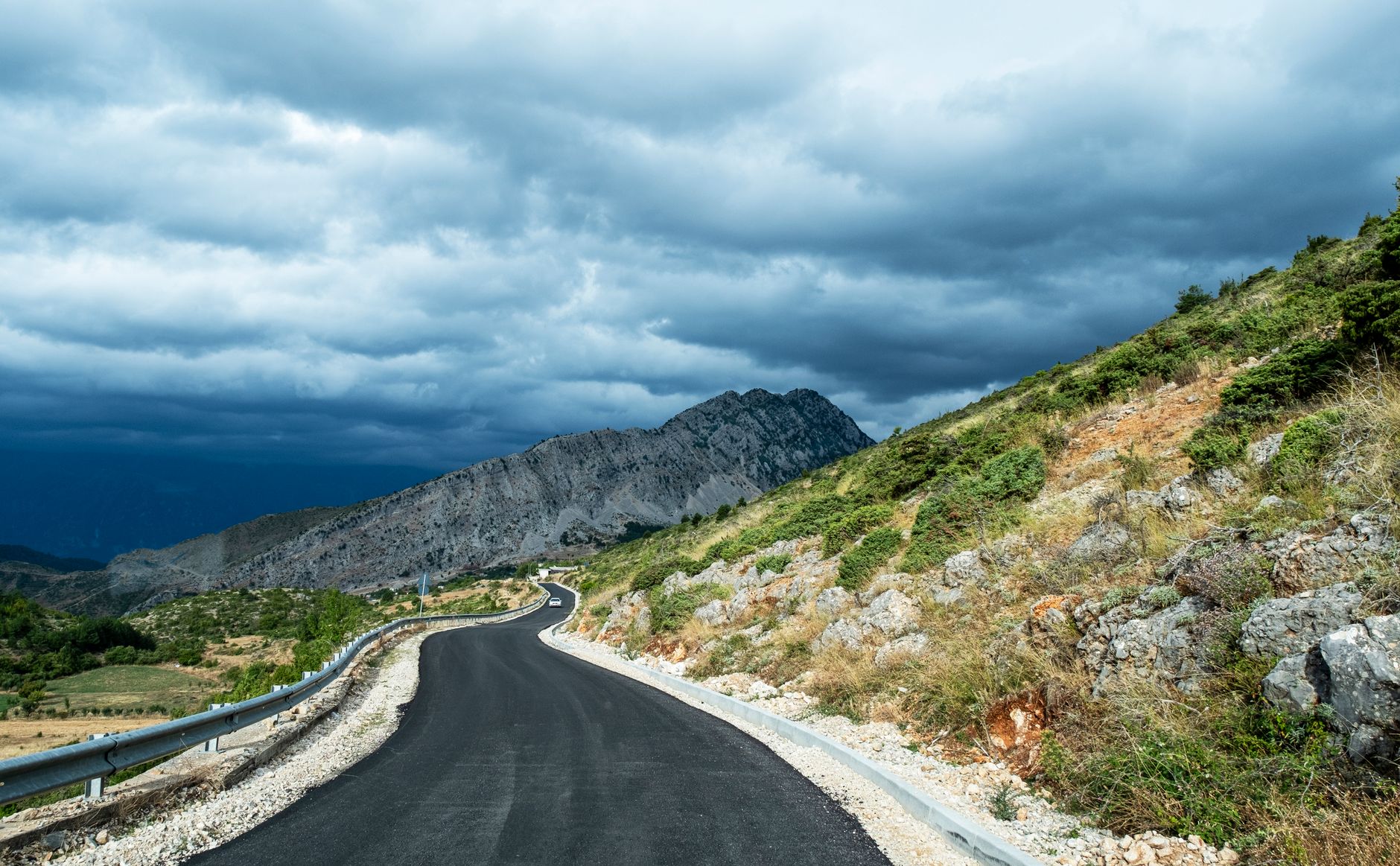
Albania is a small country, roughly the size of Maryland, but its geography packs in an extraordinary variety of landscapes. The good news for bus travelers is that the most popular tourist destinations are also the best connected. Your journey will almost certainly begin or pass through Tirana, the chaotic, colorful capital that serves as the central hub from which buses radiate in every direction.
From Tirana you can reach Shkoder in the north in about two hours, making it an easy day trip or overnight stop before heading further into the Albanian Alps. Heading south, Durres on the Adriatic coast is just 40 minutes away and has its own connections down the coast. The route south along the Ionian Riviera is one of the most scenic in the Balkans, passing through Vlora, Himara, and eventually reaching Saranda near the Greek border, with ferries available to Corfu.
Inland, Berat and Gjirokaster are both UNESCO World Heritage cities and both accessible by bus from Tirana or from each other with a connection in Fier. The northeastern highlands around Permet and Valbona require more planning and sometimes a combination of bus and furgon, but they are reachable without a private vehicle if you are willing to be flexible with your timing. The key is to treat Tirana as your home base and plan each leg as a spoke on a wheel.
- Tirana to Shkoder: 2 hours, frequent coaches and furgons
- Tirana to Berat: 2.5 hours, several daily departures
- Tirana to Saranda: 5 to 6 hours, scenic coastal route
- Tirana to Gjirokaster: 4 hours, change at Fier or direct coach
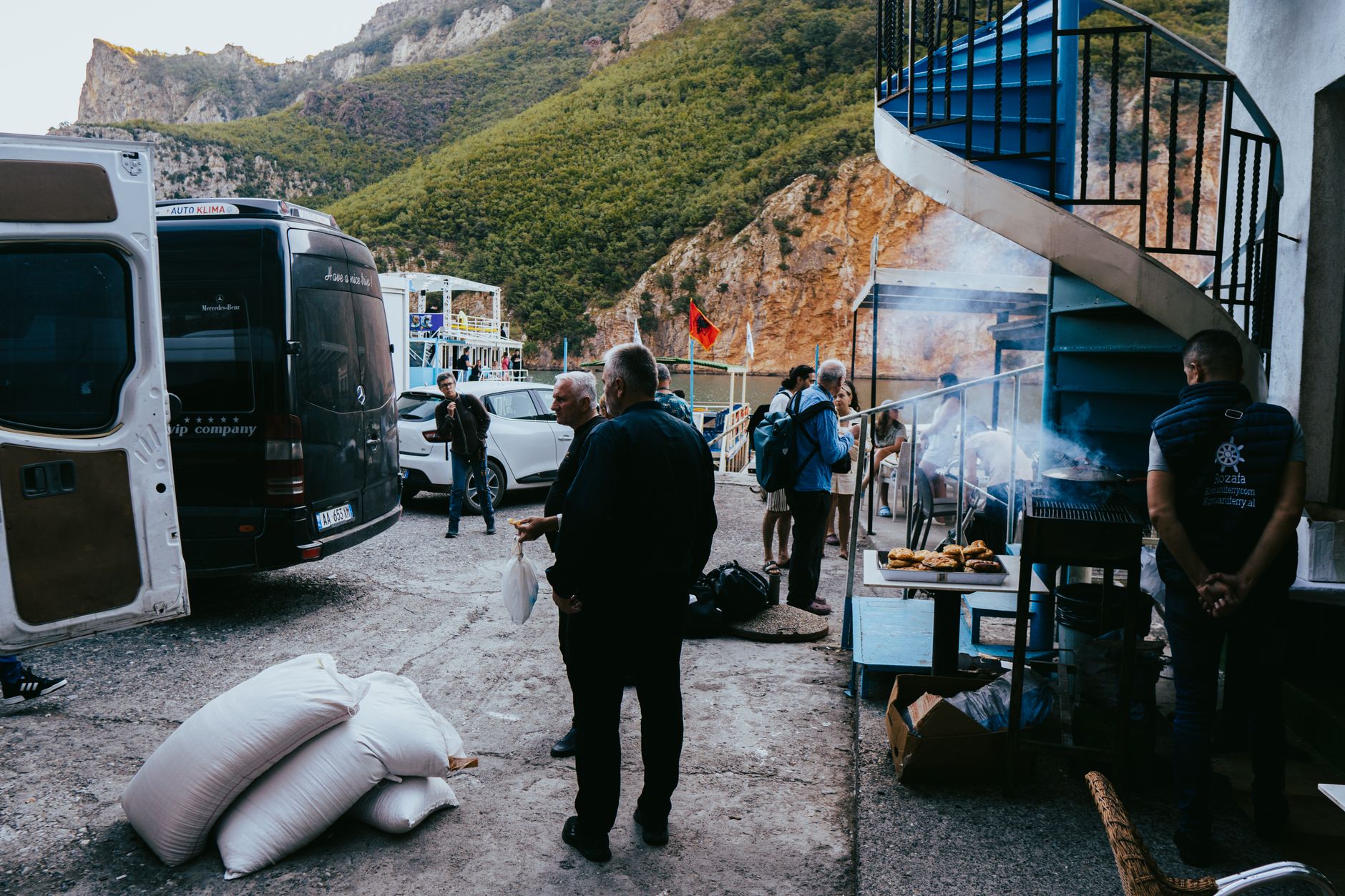
- Shkoder to Valbona: requires ferry across Lake Koman plus furgon
- Berat to Gjirokaster: possible with a change at Fier, allow a full day
The Lake Koman ferry combined with a furgon to Valbona is technically not a bus route, but it is the classic way to reach the Alps without a car and is well worth the extra planning effort.
Buying Tickets and Navigating Albanian Bus Stations

One of the most intimidating aspects of Albanian bus travel for first-timers is the apparent chaos of the bus stations. Unlike the clean, signposted terminals you might find in Western Europe, Albanian bus stations are often open-air lots where drivers and touts call out destinations, vehicles idle in no particular order, and there is no single information board showing all departures. Do not let this put you off. Once you know what to look for, navigating them becomes second nature.
For intercity coaches, head to the ticket window or booth and ask for your destination. Prices are fixed and posted, payment is almost always cash only, and the ticket is a simple paper slip or sometimes just a verbal confirmation. For furgons, you typically pay the driver or an assistant directly when you board or when you arrive at your destination. Always carry small bills in Albanian lek because drivers rarely have change for large notes.
In Tirana, different bus routes depart from different locations around the city rather than one central terminal. Buses to the north depart from near the Zogu i Zi roundabout area, while buses to the south and east leave from different points. This decentralized system confuses many visitors. The best approach is to ask your accommodation host the night before your departure exactly where to catch your specific bus, as this local knowledge is more reliable than any printed guide.
- Always carry Albanian lek in small denominations for furgon fares
- Ask your hotel or guesthouse for the exact departure point the evening before
- Tirana has multiple departure points, not one central station
- Intercity coach tickets can sometimes be bought a day in advance at the window
- Luggage under the bus costs a small tip to the driver, usually 50 to 100 lek
- No online booking system exists for most domestic routes
Write your destination in Albanian on a piece of paper and show it to station staff if there is a language barrier. Even a few words of Albanian like 'faleminderit' (thank you) and 'sa kushton' (how much) will earn you warm smiles and better help.
What to Expect On Board: Comfort, Safety, and Etiquette
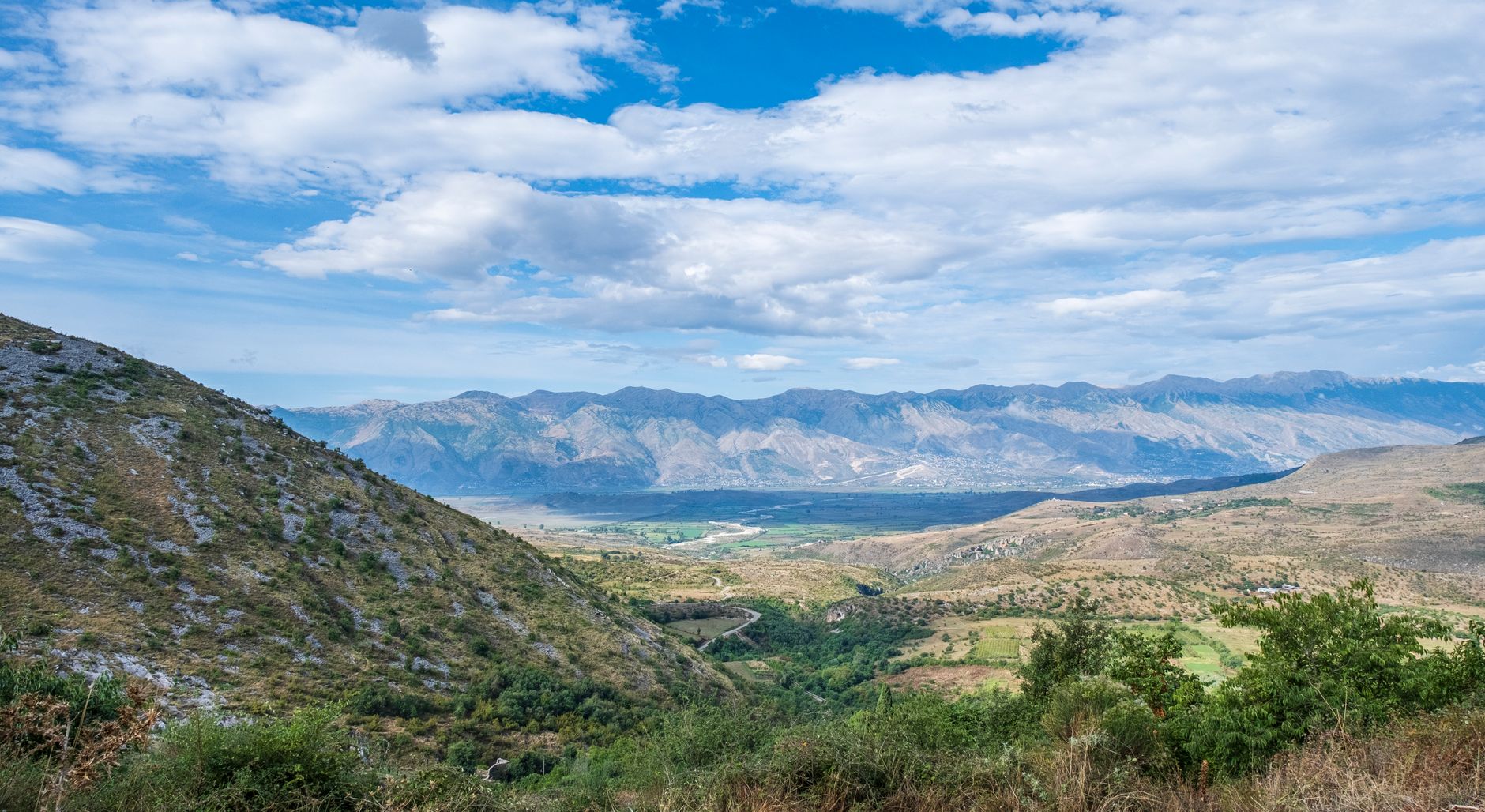
Albanian buses range from surprisingly comfortable modern coaches with air conditioning and reclining seats to older minibuses where you might share a bench with a grandmother carrying live chickens and a bag of vegetables. Both experiences are genuinely memorable, and neither should be feared. The key is to set your expectations appropriately and embrace the journey as part of the adventure rather than just a means to an end.
On intercity coaches between major cities, you can generally expect functioning air conditioning in summer, a luggage hold for larger bags, and a journey time that is reasonably close to the advertised schedule. Furgons are less predictable. They stop frequently to pick up and drop off passengers along the route, which can add significant time to your journey. A two-hour advertised furgon ride can easily take three hours in practice. This is not a problem if you plan accordingly and do not have tight onward connections.
Safety on Albanian buses is generally good. Drivers know their routes intimately and, despite what you might have heard about Albanian driving, intercity bus drivers tend to be professional. Mountain roads in the north and south can be narrow and winding, which some travelers find nerve-wracking, but serious accidents on bus routes are rare. Keep your valuables in your daypack on your lap rather than in the overhead rack, and you will have no issues.
- Bring snacks and water for journeys over two hours as stops are unpredictable
- A window seat on the right side heading south gives the best Riviera views
- Motion sickness medication is worth having for mountain furgon routes
- Buses can get very hot in July and August; carry a small fan or travel light
- Locals are generally very helpful if you look confused about your stop
- There are no onboard toilets; buses stop at roadside cafes for breaks on long routes
Download offline maps of Albania before you travel so you can track your position in real time without needing mobile data. This helps you know when to prepare to get off, especially on furgon routes with no announced stops.
Regional Deep Dive: North, Central, and South Albania by Bus

Northern Albania is the most logistically challenging region for bus travelers, but also one of the most rewarding. Shkoder is your gateway and is easily reached from Tirana. From Shkoder, furgons run to Bajram Curri and the Valbona Valley, though services are infrequent and you should plan to depart early in the morning. The famous Lake Koman ferry is a separate experience that connects the lowlands to the highlands and runs daily in summer. Combining bus, ferry, and furgon, you can do a spectacular loop through the Albanian Alps without ever renting a car.
Central Albania is the easiest region to navigate by bus. Berat, the city of a thousand windows, is served by multiple daily coaches from Tirana and makes an excellent base for exploring the surrounding region. Fier, a transport hub rather than a tourist destination, is where you change buses if you are traveling between Berat and the south. It is worth knowing that Fier's bus station is functional but basic, and connections can require a short wait.
Southern Albania is where bus travel becomes truly spectacular. The coastal road from Vlora to Saranda, passing through Dhermi, Himara, and Borsh, is one of the most beautiful routes in the Balkans. Buses and furgons run this route daily in summer, though services thin out considerably in winter. Saranda itself is well connected to Gjirokaster inland, and the combination of the Riviera coast and the Ottoman mountain towns of the south makes this region the highlight of any Albanian bus trip.
Crossing Into Kosovo or North Macedonia by Bus
Albania's bus network does not stop at the border. Regular coaches run from Tirana to Pristina in Kosovo and to Skopje in North Macedonia, making it easy to extend your Balkan adventure by land. These international routes use proper coaches, depart from Tirana, and require your passport. Journey times are roughly four to five hours to Pristina and six to seven hours to Skopje. Fares remain very affordable by European standards. If you are planning a broader Balkans trip, Albania by bus connects seamlessly into the wider regional network.
- North: Shkoder is the hub; depart early for furgons to the Alps
- Central: Berat is easy to reach; Fier is the transfer point for south
- South: Coastal route Vlora to Saranda is unmissable in summer
- Gjirokaster to Saranda: about 1.5 hours, regular furgons
- Permet and Gjirokastra area: good base for exploring the south by local furgon
- Winter services on coastal and mountain routes are significantly reduced
If you are doing the full south loop, consider traveling the coast southward and returning inland through Gjirokaster and Berat. This gives you two completely different landscapes and avoids backtracking on the same route.
Budget Breakdown: How Much Does Bus Travel in Albania Cost?
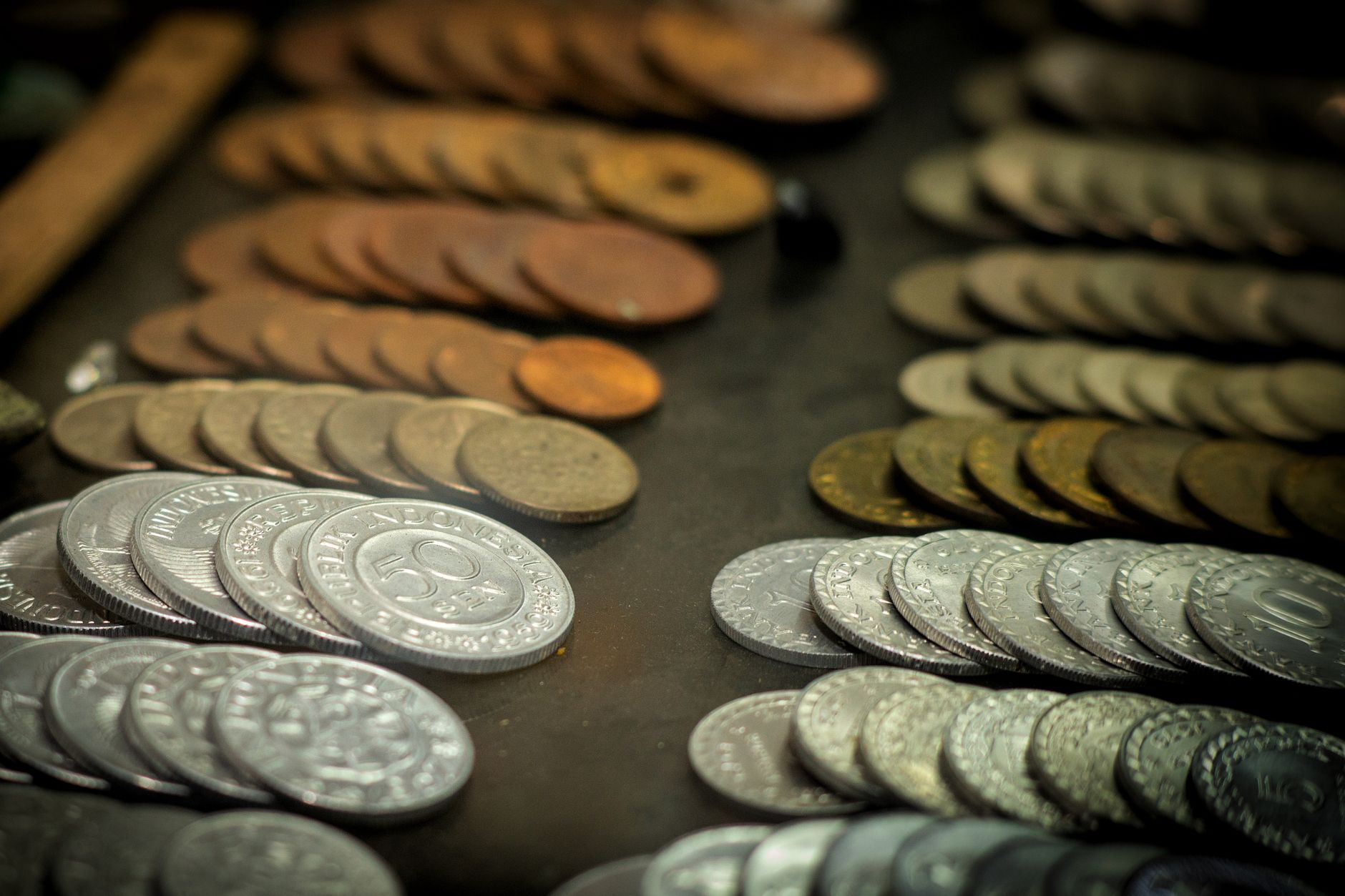
One of the most compelling reasons to travel Albania by public bus is the extraordinary value for money. Albania remains one of the cheapest countries in Europe for transport, and bus fares reflect this. A one-way ticket from Tirana to Berat, a journey of about 2.5 hours, typically costs around 400 to 500 Albanian lek, which is roughly 3.5 to 4.5 euros. The longer route from Tirana to Saranda, taking around five to six hours, rarely exceeds 1,000 lek or about 8 to 9 euros.
Furgon fares are even cheaper for short hops. A 30-minute furgon ride between nearby towns might cost as little as 100 to 150 lek, under 1.5 euros. City buses in Tirana operate on a flat fare of 40 lek per journey, which is less than 40 euro cents. When you add it all up, a traveler crossing Albania from north to south entirely by public transport can do so for well under 30 euros in total bus fares.
The savings compared to renting a car are dramatic. A week of car rental in Albania, including fuel and insurance, can easily cost 200 to 300 euros or more. Bus travel for the same week of destinations might total 20 to 25 euros. That is money you can spend on a night in a beautiful guesthouse, a long lunch of traditional Albanian food, or an extra day exploring a place you fall in love with.
- Tirana to Berat: approx 400-500 lek (3.5-4.5 EUR)
- Tirana to Saranda: approx 800-1000 lek (7-9 EUR)
- Tirana to Shkoder: approx 300-400 lek (2.5-3.5 EUR)
- Short furgon hops: 100-200 lek (under 2 EUR)
- Tirana city bus: 40 lek flat fare (under 0.40 EUR)
- Always pay in Albanian lek; euros are occasionally accepted but at poor rates
Withdraw Albanian lek from an ATM in Tirana before heading to smaller towns. ATMs are less common outside major cities, and having local currency ensures you can always pay for your bus fare without any hassle.
Essential Tips for a Smooth Bus Journey Through Albania
Traveling Albania by public bus rewards the flexible and penalizes the rigid. The single most important mindset shift you can make is to treat your itinerary as a loose framework rather than a fixed schedule. Buses run late, furgons leave early when they fill up unexpectedly, and occasionally a service simply does not run on a particular day. Build buffer time into every leg of your journey, especially when you have an international flight or a ferry to catch.
Accommodation hosts are your single best resource for transport logistics. Guesthouse owners and hostel staff in Albania have an almost encyclopedic knowledge of local bus schedules, departure points, and seasonal changes. Always ask them the evening before a departure rather than relying on information you found online months ago. Schedules change seasonally and sometimes without any public announcement.
Pack light if you can. While luggage goes under the bus on coaches, on a crowded furgon your bag may need to sit on your lap or be wedged into a tiny overhead space. A 40-liter backpack or a soft-sided bag is far more practical than a hard-shell suitcase for Albanian bus travel. Dress in layers, especially if you are traveling in spring or autumn when mountain temperatures can drop sharply even after a warm morning in the lowlands.
- Build at least one buffer day into your itinerary for each major region
- Ask your accommodation host for the latest schedule the night before
- Pack a 40-liter backpack rather than a large suitcase
- Bring a power bank as charging points on buses are rare
- Learn a few words of Albanian; locals appreciate the effort enormously
- Keep a printed or screenshot copy of your destination name in Albanian
- Travel insurance that covers missed connections is a wise investment
The best time to travel by bus in Albania is May to June or September to October. Summer is peak season with more frequent services but also more crowded vehicles and intense heat. Winter sees reduced services on many mountain and coastal routes.
Key Albania Bus Routes at a Glance
| Route | Approx Duration | Approx Fare (EUR) | Frequency | Best Vehicle Type |
|---|---|---|---|---|
| Tirana to Shkoder | 2 hours | 2.5 - 3.5 EUR | Hourly in morning | Coach or furgon |
| Tirana to Berat | 2.5 hours | 3.5 - 4.5 EUR | Several daily | Coach |
| Tirana to Saranda | 5 - 6 hours | 7 - 9 EUR | 2 - 3 daily | Coach |
| Tirana to Gjirokaster | 4 hours | 5 - 6 EUR | 2 - 3 daily | Coach |
| Saranda to Gjirokaster | 1.5 hours | 2 - 3 EUR | Frequent furgons | Furgon |
| Shkoder to Bajram Curri | 3 - 4 hours | 3 - 4 EUR | 1 - 2 morning departures | Furgon |
Frequently Asked Questions
Can I really travel all of Albania without renting a car?
Yes, absolutely. The vast majority of Albania's tourist highlights are reachable by a combination of intercity coaches and furgons. Some very remote villages in the northeastern Alps may require hiking or a private transfer for the final stretch, but every major town, city, and coastal resort is accessible by public transport. With a flexible attitude and a few days of buffer time, a full cross-country trip by bus is entirely achievable.
Are there online booking systems for Albanian buses?
For most domestic routes, there is no centralized online booking system. Tickets are purchased in cash at station windows or directly from the driver. A few private coach companies operating on the most popular routes have begun offering online or phone reservations, but this is not yet standard practice. Your best approach is to arrive at the station in the morning and buy your ticket on the day.
How safe is bus travel in Albania?
Bus travel in Albania is generally safe. Intercity coach drivers are professional, and serious incidents are rare. The main risks are the same as anywhere: petty theft in crowded stations and the occasional unpredictable mountain road. Keep your valuables close, use your daypack for important documents and electronics, and you will have no problems. Albanian people are famously hospitable and will often go out of their way to help foreign travelers.
What happens if I miss my bus or the furgon leaves without me?
Missing a furgon is less of a disaster than it sounds because another one will usually come along within an hour or two on popular routes. For intercity coaches, you may need to wait until the next day's service on less frequent routes. This is exactly why building buffer days into your itinerary is so important. Having a comfortable guesthouse to return to and a good book makes an unexpected extra night in a charming Albanian town feel like a bonus rather than a problem.
Do buses run year-round in Albania?
Major intercity routes between Tirana, Berat, Shkoder, Gjirokaster, and Saranda run year-round, though with reduced frequency in winter. Coastal routes along the Riviera and mountain routes to the Albanian Alps see significantly fewer services from November through March. If you are traveling in winter, research your specific route carefully and ask locally, as some furgon services suspend entirely in the coldest months.
Can I use euros on Albanian buses instead of Albanian lek?
Officially, Albanian lek is the currency for all transactions, including bus fares. In practice, some drivers on tourist-heavy routes may accept euros, but you will almost certainly get an unfavorable exchange rate or rounded-up fare. It is always better to carry Albanian lek in small denominations. Withdraw cash from an ATM in Tirana or another large city before heading into smaller towns where banking facilities are limited.
Plan your Albania adventure
Traveling Albania entirely by public bus is not just a budget strategy, it is a philosophy of travel. When you sit in a furgon next to a farmer heading to market, when a fellow passenger insists on sharing their homemade byrek with you, when you watch the Ionian Sea appear around a mountain curve from a rattling minibus window, you are experiencing Albania in a way that no rental car itinerary can replicate. The slight inconveniences, the early morning waits, the occasional detour through an unplanned town, these are not obstacles to your trip. They are the trip.
Albania is changing fast. New roads are being built, tourist numbers are rising, and the bus network is slowly becoming more organized and reliable. Now is the perfect moment to travel it the old way, on local buses, with local people, at local prices. Pack your bag, stock up on lek, learn a few words of Albanian, and get ready to discover one of Europe's most genuinely surprising countries from the best seat in the house, a window seat on an Albanian bus.