Rafting the Osumi Canyon: Albania's Best White-Water Adventure

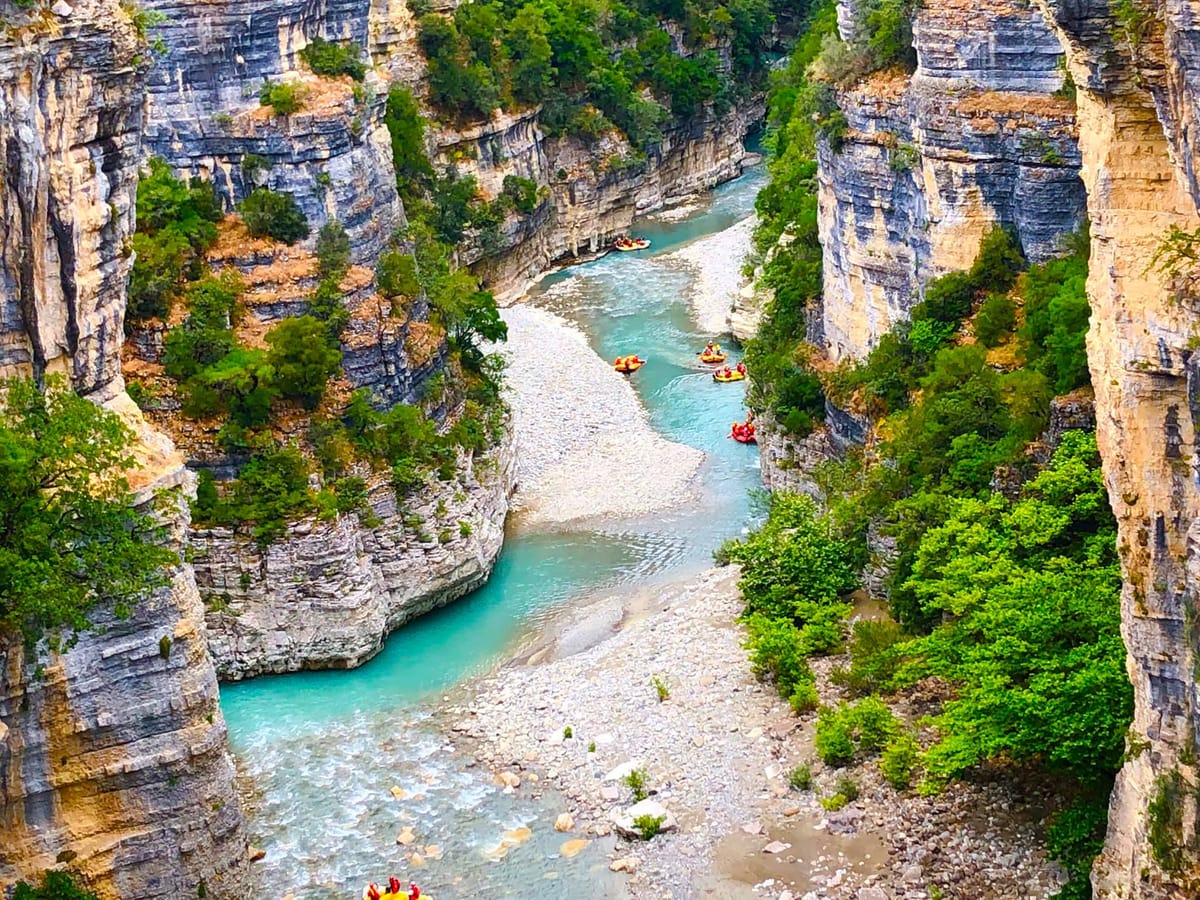
Imagine paddling through a narrow gorge where sheer limestone cliffs rise over 80 meters above your head, the river churning turquoise and white beneath your raft, and the only sounds you can hear are rushing water and the echo of your own laughter. This is the Osumi Canyon experience — a raw, exhilarating, and utterly unforgettable adventure hidden in the Skrapar region of southern Albania. It is the kind of place that makes you feel genuinely small in the best possible way.
Albania has been quietly earning its reputation as one of Europe's most exciting adventure travel destinations, and the Osumi Canyon is at the very top of that conversation. Unlike the overcrowded rafting circuits of Western Europe, the Osumi offers something increasingly rare: a sense of true wilderness. The canyon stretches for roughly 26 kilometers, carving through ancient rock formations that have taken millions of years to sculpt. When you drop into that gorge on a raft, you are entering a world that very few travelers have ever seen.
This guide covers everything you need to know before you go — from the best time of year to visit and what difficulty levels to expect, to what gear to bring and how to make the most of your time in the canyon. Whether you are a solo traveler craving adrenaline, a couple looking for a shared adventure, or a group of friends ready to push your limits together, rafting the Osumi Canyon belongs on your Albania itinerary.
Key Takeaways
| Best Season | March to May (spring) for highest water levels and most exciting rapids |
|---|---|
| Canyon Length | Approximately 26 km of navigable gorge |
| Difficulty Level | Class II to Class IV depending on season and water levels |
| Trip Duration | Half-day to full-day depending on the route chosen |
| Nearest Town | Corovode, the gateway town to the Osumi Canyon |
| Skill Requirement | No prior rafting experience required for standard routes |
| What to Bring | Swimwear, secure footwear, sunscreen, a dry bag, and a sense of adventure |
Why the Osumi Canyon Should Be on Every Adventurer's Radar
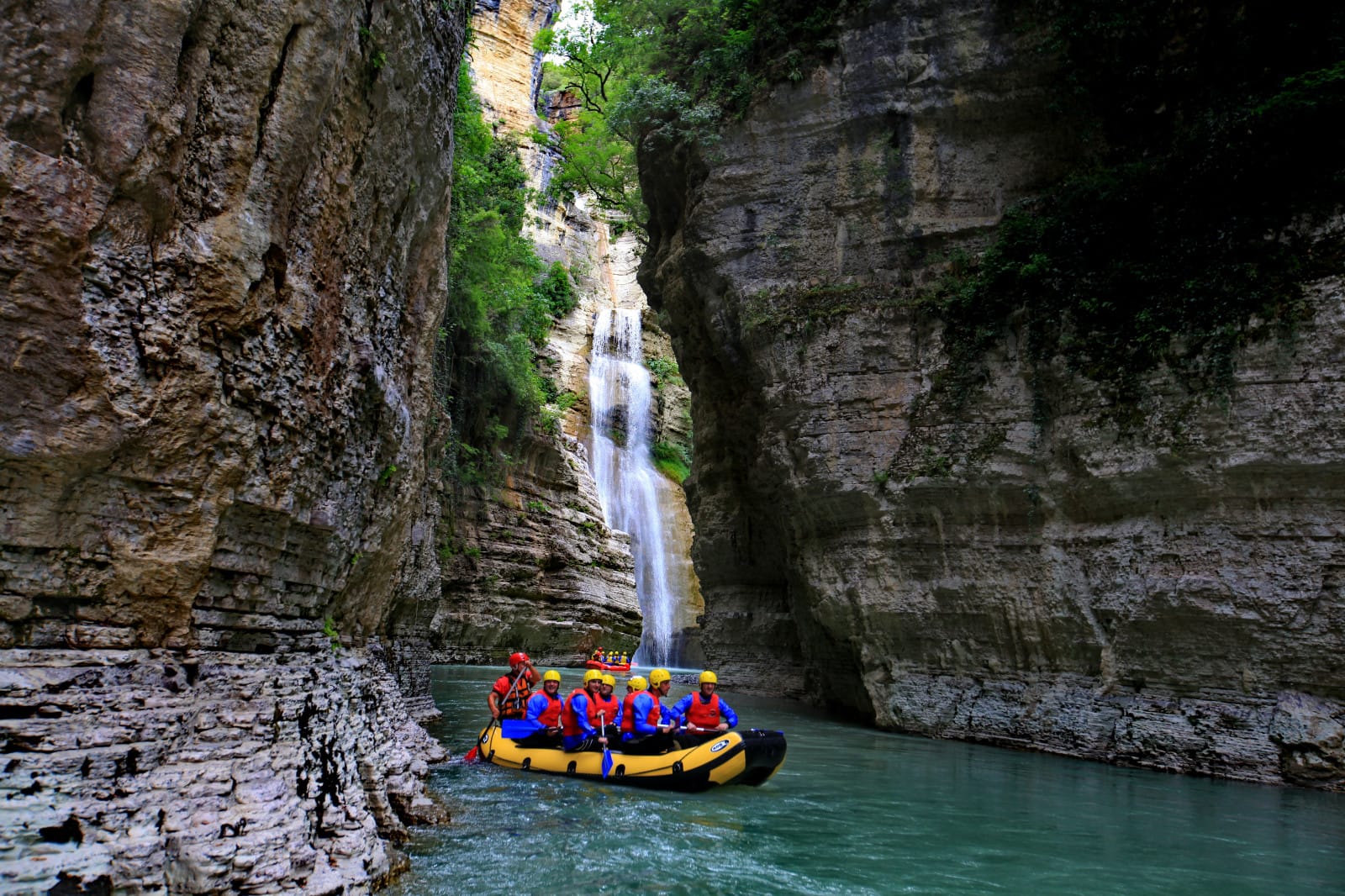
The Osumi Canyon is not just another pretty gorge. It is a geological masterpiece that has been forming for millions of years, and it remains one of the least commercialized adventure destinations in all of Europe. While other Balkan countries have developed their rafting industries into polished, tourist-heavy operations, the Osumi still feels like a genuine discovery — the kind of place you stumble upon and immediately want to keep secret.
The canyon walls are made of layered limestone that has been carved by the Osumi River over countless centuries. As you raft through the narrowest sections, those walls close in to just a few meters apart, creating a dramatic natural corridor that blocks out the sky and amplifies every sound. In wider sections, the canyon opens up to reveal waterfalls cascading down the rock face, hidden caves, and crystal-clear swimming holes that beg you to jump in.
Beyond the pure thrill of the rapids, the Osumi Canyon offers a window into a part of Albania that most tourists never reach. The surrounding Skrapar region is rugged, rural, and deeply authentic. The communities near Corovode have a long history tied to this river, and visiting here means contributing directly to local livelihoods while experiencing something genuinely off the beaten path. This is adventure travel done right — meaningful, sustainable, and absolutely spectacular.
- One of the deepest canyons in the Balkans, reaching depths of over 80 meters
- Largely untouched by mass tourism, offering a wilderness feel rare in Europe
- Combines white-water thrills with stunning geological and natural scenery
- Accessible from Berat in under two hours, making it easy to add to your Albania itinerary
- Suitable for a wide range of experience levels depending on season and route
Pair your Osumi Canyon rafting trip with a visit to the nearby UNESCO-listed city of Berat for a perfect mix of adventure and culture in a single day or weekend.
Best Time to Go: Seasons, Water Levels, and What to Expect
Timing is everything when it comes to rafting the Osumi Canyon, and the season you choose will dramatically shape your experience. The river is fed by snowmelt from the surrounding mountains as well as seasonal rainfall, which means water levels — and therefore the intensity of the rapids — fluctuate significantly throughout the year.
Spring, running from March through May, is widely considered the best time to raft the Osumi. Snowmelt from the highlands pushes water levels up, creating powerful Class III and Class IV rapids that will get your heart racing. The canyon is lush and green during this period, wildflowers cling to the cliff faces, and the air is cool and refreshing. This is peak season for a reason, and if you want the most dramatic white-water experience, this is your window.
Summer brings lower water levels, which actually makes the canyon more accessible to beginners and families. The rapids calm down to a Class II experience in most sections, and the slower pace gives you more time to swim, explore caves, and enjoy the turquoise pools that form along the route. Temperatures in the canyon can be surprisingly cool even when it is hot outside, thanks to the shade provided by the towering walls. Autumn offers a middle ground — moderate water levels, fewer visitors, and beautiful golden light filtering through the canyon in the late afternoon.
- March to May: highest water levels, Class III-IV rapids, best for thrill-seekers
- June to August: lower water levels, Class II rapids, ideal for beginners and families
- September to November: moderate conditions, fewer crowds, stunning autumn colors
- December to February: canyon is generally not navigable due to cold and unpredictable water
If you are visiting in summer and want more exciting rapids, ask about early morning departures when water released from upstream can temporarily boost flow levels in certain sections of the canyon.
Understanding the Rapids: Difficulty Levels and What You Will Face

The Osumi Canyon offers a varied white-water experience that ranges from gentle floats through breathtaking scenery to genuine adrenaline-pumping rapids that will test your paddling skills and your nerve. Understanding the international river difficulty scale before you go will help you set realistic expectations and choose the right section of the canyon for your experience level.
Class I and II sections are found throughout the canyon and are characterized by small waves, clear channels, and very little risk. These stretches are perfect for catching your breath, taking in the scenery, and jumping off rocks into the pools below. They are also where you will find most of the canyon's famous swimming holes, which are genuinely some of the most beautiful natural swimming spots in Albania.
Class III rapids introduce irregular waves, narrow passages, and the need for basic paddling technique and coordination with your guide. These are exciting without being genuinely dangerous, and most fit adults with no prior experience can handle them after a brief safety briefing. Class IV sections — which appear primarily in spring — involve powerful, turbulent water, precise maneuvering, and a real possibility of capsizing. Your guide will brief you thoroughly on these sections, and you will have the option to portage around them if you prefer. Regardless of the level, every trip through the Osumi Canyon is guided, and safety is always the top priority.
- Class I-II: calm water with small waves, suitable for all ages and abilities
- Class III: moderate rapids with irregular waves, requires basic paddling coordination
- Class IV: powerful and turbulent, primarily in spring, requires good fitness and confidence
- All trips are guided by certified professionals with full safety equipment provided
- Helmets, life jackets, and wetsuits are standard issue on all Osumi rafting trips
Do not be embarrassed to tell your guide your exact experience level before launching. A good guide will adjust the route, the pace, and the level of challenge to match your group — that is their job and they take it seriously.
What to Pack: Your Complete Osumi Canyon Gear List

Packing correctly for a day in the Osumi Canyon can make the difference between a comfortable, joyful adventure and a miserable, cold, sunburned ordeal. The good news is that you do not need expensive specialist gear — most of what you need you probably already own or can pick up cheaply before you go.
Your clothing choices matter more than you might think. You will get wet — guaranteed — so plan accordingly. A swimsuit or quick-dry shorts are essential, and in spring or autumn you will want a thermal layer underneath your wetsuit (which is typically provided). Avoid cotton at all costs, as it holds water and makes you cold quickly. Synthetic or wool base layers are your best friends in cooler conditions.
Footwear is another critical consideration. You need shoes that will stay on your feet in fast-moving water and provide grip on slippery rocks. Old sneakers or water shoes with a secure strap work perfectly. Flip-flops and sandals without heel straps are a safety hazard and will likely be prohibited by your guide. Beyond clothing and footwear, a dry bag is perhaps the single most important item you can bring — it keeps your phone, camera, cash, and documents safe and dry throughout the trip.
- Swimsuit or quick-dry shorts — mandatory base layer
- Secure water shoes or old sneakers with good grip
- Dry bag for phone, camera, cash, and documents
- High-SPF sunscreen applied before you launch (reapplication is difficult on the water)
- Reusable water bottle — you will need to stay hydrated throughout the day
- Light snacks such as energy bars or fruit for longer full-day trips
- A change of dry clothes and a towel for after the trip
- Polarized sunglasses with a retention strap to keep them on your face
Leave your GoPro mount at home and rent a waterproof camera or action cam from a local provider if you want to capture footage on the water. Loose cameras and phone attachments frequently end up at the bottom of the river.
Getting There: How to Reach the Osumi Canyon from Major Albanian Cities

The Osumi Canyon is located near the town of Corovode in the Skrapar region of south-central Albania. While it is not the easiest destination to reach by public transport, it is absolutely manageable with a little planning — and the journey itself through Albania's dramatic mountain landscapes is part of the experience.
If you are based in Berat, you are in the best possible position. Berat is approximately 55 kilometers from Corovode, and the drive takes around one hour along winding mountain roads. Many travelers choose to base themselves in Berat for a night or two and then make the Osumi Canyon a day trip. This is arguably the most convenient and enjoyable approach, as Berat itself is one of Albania's most beautiful cities and well worth exploring.
From Tirana, the journey takes approximately two to two and a half hours by car, making it feasible as a long day trip from the capital if you are willing to start early. Furgons — the shared minibus system that forms the backbone of Albanian public transport — connect Tirana and Berat to Corovode, though schedules can be irregular and the journey takes longer than driving. Renting a car gives you the most flexibility and is highly recommended if you plan to explore the Skrapar region more broadly. Roads are improving across Albania, but mountain routes require confident driving.
- From Berat: approximately 55 km, one hour by car — the most convenient base
- From Tirana: approximately 160 km, two to two and a half hours by car
- From Gjirokaster: approximately 130 km, two hours by car through scenic mountain roads
- Furgon connections available from Berat to Corovode, though schedules vary
- Car rental strongly recommended for maximum flexibility in the Skrapar region
Book your rafting trip in advance and confirm the meeting point carefully — some operators meet at the canyon entrance while others organize transport from Corovode or even from Berat. Knowing this ahead of time saves a lot of confusion on the day.
Beyond the Raft: Other Things to See and Do Around the Osumi Canyon
The Osumi Canyon is the headline act, but the surrounding Skrapar region offers a supporting cast of experiences that make this part of Albania well worth spending more than a single day exploring. If you have the time, building a two or three night itinerary around the canyon will reward you with memories that go far beyond the raft.
The canyon itself can also be explored on foot along sections of its rim, offering dramatic aerial views of the gorge below. Several hiking trails wind through the surrounding hills, passing through traditional Albanian villages where life moves at a pace that feels completely disconnected from the modern world. These villages are wonderful places to stop for a home-cooked meal, a glass of rakia, and a conversation with locals who are genuinely delighted to welcome visitors.
The Bogova Waterfall, located just a short drive from Corovode, is another highlight of the region that pairs beautifully with a canyon rafting day. The waterfall plunges into a natural pool surrounded by lush vegetation and is one of the most photogenic spots in southern Albania. And of course, no visit to this part of the country is complete without a day in Berat — the City of a Thousand Windows — whose Ottoman-era architecture, hilltop castle, and vibrant cafe culture make it one of Albania's most beloved destinations.
- Rim hiking trails above the canyon offer spectacular aerial views of the gorge
- Traditional villages in the Skrapar region provide authentic cultural experiences
- Bogova Waterfall is a stunning natural attraction just minutes from Corovode
- Berat's UNESCO-listed old town is a must-visit for history and architecture lovers
- Local restaurants in Corovode serve hearty Albanian mountain cuisine at very affordable prices
If you are spending a night in Corovode, ask your accommodation host about guided walks to viewpoints above the canyon at sunrise. The light at that time of day is extraordinary and you will almost certainly have the viewpoint entirely to yourself.
Safety, Responsible Travel, and Supporting Local Communities

Adventure travel comes with responsibility, and rafting the Osumi Canyon is no exception. The good news is that the canyon has an excellent safety record when trips are run by experienced, certified guides — and choosing a reputable local operator is the single most important decision you will make in your planning process.
Always ensure that your guide is certified and that your trip includes properly maintained safety equipment: life jackets, helmets, wetsuits in cooler months, and throw bags for rescue situations. A proper safety briefing before you launch is non-negotiable. If any operator skips this step or seems dismissive of safety concerns, trust your instincts and walk away. The Osumi Canyon is a powerful natural environment, and it deserves respect.
From a responsible travel perspective, the Osumi Canyon is a fragile ecosystem that depends on visitors treating it with care. Pack out everything you bring in, do not disturb wildlife, and avoid using chemical sunscreens that can harm the river's aquatic life — opt for reef-safe mineral formulas instead. Choosing locally owned operators, eating at local restaurants, and staying in family-run guesthouses ensures that your tourism spending directly benefits the communities that call this remarkable region home. When you travel this way, you become part of the solution rather than part of the problem.
- Always verify that your guide holds current safety certifications before booking
- Insist on a full safety briefing before entering the water — this is non-negotiable
- Use reef-safe mineral sunscreen to protect the canyon's delicate aquatic ecosystem
- Carry out all waste — leave the canyon cleaner than you found it
- Choose locally owned operators and accommodation to maximize community benefit
- Respect local customs in surrounding villages — dress modestly and ask before photographing people
Travel insurance that specifically covers white-water rafting is essential before you book any canyon trip. Check your policy carefully, as many standard travel insurance plans exclude adventure sports activities above a certain difficulty rating.
Osumi Canyon Rafting by Season: Quick Comparison
| Season | Water Level | Rapid Difficulty | Best For | Crowd Level |
|---|---|---|---|---|
| Spring (Mar-May) | High | Class III-IV | Thrill-seekers and experienced paddlers | Moderate |
| Early Summer (Jun) | Medium-High | Class II-III | Intermediate paddlers and active travelers | Low-Moderate |
| Summer (Jul-Aug) | Low-Medium | Class I-II | Beginners, families, and swimmers | Low |
| Autumn (Sep-Nov) | Medium | Class II-III | All levels, photography enthusiasts | Very Low |
| Winter (Dec-Feb) | Variable | Not recommended | Not suitable for rafting | Minimal |
Frequently Asked Questions
Do I need prior rafting experience to raft the Osumi Canyon?
No prior experience is required for the standard summer routes, which feature Class I and Class II rapids. Your guide will give you a thorough safety briefing and paddling instruction before you launch. For spring trips with Class III and IV rapids, a basic level of fitness and comfort in water is recommended, but technical rafting experience is not necessary.
How long does a typical Osumi Canyon rafting trip take?
Most standard trips last between four and six hours on the water, covering the most scenic sections of the canyon. Full-day options that explore a longer stretch of the gorge are also available and typically run eight to nine hours including breaks for swimming and lunch. Half-day morning or afternoon trips are offered in summer when water levels are lower.
What is the minimum age for rafting the Osumi Canyon?
Most operators set the minimum age at around eight to ten years old for summer trips, and twelve to fourteen for spring high-water trips. Children must be able to swim and must be accompanied by a responsible adult. Always check the specific age and weight requirements with your operator before booking, as these can vary.
Is the Osumi Canyon rafting trip suitable for non-swimmers?
Non-swimmers can participate in summer trips on the calmer Class I-II sections, provided they wear their life jacket at all times and inform their guide before departure. Swimming in the pools is entirely optional. However, non-swimmers are generally not recommended for spring high-water trips where capsizing is a realistic possibility.
Can I bring my camera or phone on the rafting trip?
Yes, but you must protect your devices in a waterproof dry bag or waterproof case. Loose phones and cameras are easily lost or damaged in the rapids. Many operators offer waterproof pouches for rent or sale at the launch point. Action cameras mounted securely to helmets are a popular option for capturing footage without risking your main device.
What should I eat before and after the rafting trip?
Eat a light but nourishing meal one to two hours before your trip — something with good carbohydrates and protein to fuel your paddling. Avoid heavy, greasy food that might cause discomfort on the water. After the trip, Corovode's local restaurants serve excellent traditional Albanian mountain food including grilled meats, fresh salads, and hearty bean dishes that are perfect for refueling after a full day of adventure.
Plan your Albania adventure
Rafting the Osumi Canyon is the kind of experience that recalibrates your sense of what travel can be. It strips away the comfortable predictability of tourist trails and drops you into something ancient, powerful, and wildly alive. Whether you are threading through narrow limestone corridors in spring's surging waters or drifting lazily through turquoise pools on a warm summer afternoon, the canyon has a way of making everything else feel very far away — and that, ultimately, is the greatest gift any destination can offer. Albania has been waiting for the world to discover it, and the Osumi Canyon is one of its most compelling invitations.
So pack your dry bag, lace up your water shoes, and point yourself toward Corovode. The canyon is waiting, the river is running, and one of Europe's most extraordinary white-water adventures is yours to claim. You will come back sunburned, soaked, and grinning from ear to ear — and you will already be planning your return before you have even dried off. That is the Osumi Canyon effect, and once it gets you, it never really lets go.