Business travel car rental guide for Albania

Business travellers arriving in Albania often encounter unexpected challenges when renting vehicles, from unclear pricing structures to unfamiliar local regulations. Navigating rental procedures whilst maintaining tight schedules and professional standards requires careful planning and insider knowledge. This comprehensive guide walks you through essential preparation steps, vehicle selection strategies, booking procedures, and common pitfalls to avoid. You’ll gain practical insights to secure reliable, cost-effective transport that meets your business needs and ensures smooth operations throughout your Albanian stay.
Table of Contents
- Key takeaways
- Preparing for your business car rental in Albania
- Choosing the right car for your business needs
- Step-by-step guide to booking and picking up your rental car
- Avoiding common pitfalls and maximising your rental experience
- Discover reliable car rental options with RentX Albania
- Frequently asked questions
Key Takeaways
| Point | Details |
|---|---|
| Preparation and documents | Plan ahead with the required documents and knowledge of local rules to avoid delays. |
| Choosing the right car | Choose a vehicle type that fits the trip size and corporate image, balancing practicality with cost. |
| Insurance and pricing clarity | Review coverage carefully and request the full policy details before booking to avoid surprises. |
| Verify rental details | Double check inclusions, deposits and terms to ensure transparency and peace of mind. |
Preparing for your business car rental in Albania
Successful car rental begins long before you arrive at the collection desk. Proper preparation eliminates delays and ensures you meet all legal requirements for driving in Albania.
You’ll need three essential documents: a valid driving licence, passport or national identification card, and a credit card for the security deposit. Your licence must be valid for at least one year and clearly legible. If your licence uses non-Latin script, obtain an international driving permit before departure, as Albanian rental agencies typically require this translation document.
Albania recognises most foreign driving licences for short-term visitors, but verification standards vary between providers. To rent a car in Albania, a valid driving licence and identification are mandatory, alongside an understanding of local road rules for safe travel. Research specific requirements for your nationality well in advance.
Local driving regulations differ significantly from many Western countries. Speed limits are strictly enforced: 40 km/h in residential areas, 80 km/h on open roads, and 110 km/h on motorways. Right-hand traffic applies, and headlights must remain on at all times, even during daylight hours. Mobile phone use whilst driving is prohibited unless using hands-free systems.
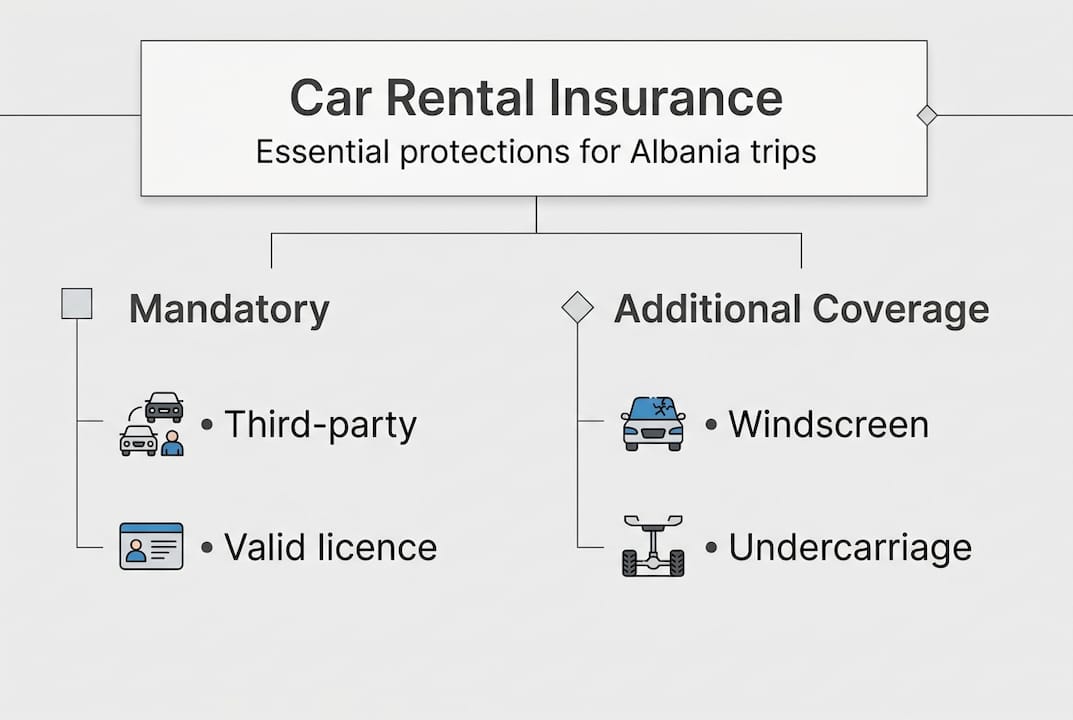
Insurance coverage deserves careful attention before confirming your booking. Basic third-party liability insurance is legally required, but comprehensive coverage protects against damage, theft, and collision incidents. Review policy exclusions carefully, particularly regarding off-road driving and cross-border travel restrictions. Many standard policies exclude mountain roads and remote areas, which could impact business travel to regional destinations.
Pro Tip: Request detailed insurance documentation via email before arrival. This allows time to clarify coverage gaps and arrange supplementary protection if needed, avoiding rushed decisions at the rental desk.
Credit card requirements often surprise business travellers. Most agencies require cards in the primary driver’s name with sufficient available credit for deposits ranging from €300 to €1,000 depending on vehicle category. Debit cards are rarely accepted for premium vehicles. Verify your card’s international transaction capabilities and notify your bank of Albanian travel dates to prevent fraud blocks.
Choosing the right car for your business needs
Vehicle selection directly impacts your professional effectiveness and comfort throughout your Albanian business trip. The right choice balances practical requirements with budget considerations and corporate image.
Albanian rental fleets typically offer four main categories suited to business travel. Economy cars provide fuel efficiency and easy urban maneuvering but limited luggage space. Executive sedans project professional credibility with enhanced comfort and technology features. SUVs handle varied terrain confidently, essential for regional business visits. Minivans accommodate larger groups or substantial equipment transport needs.
| Vehicle category | Seating capacity | Luggage suitability | Fuel efficiency | Professional use case |
|---|---|---|---|---|
| Economy | 4-5 passengers | 2 medium cases | Excellent | Solo travel, urban meetings |
| Executive | 4-5 passengers | 3 large cases | Good | Client meetings, corporate image |
| SUV | 5-7 passengers | 4+ large cases | Moderate | Regional travel, rough roads |
| Minivan | 7-9 passengers | 6+ large cases | Lower | Team transport, equipment hauling |
Selecting between economy, executive, or minivan options depends on business traveller preferences for comfort, space, and impression. Consider these factors when making your decision.
Trip duration influences vehicle choice significantly. Short urban visits of one or two days favour economy options that minimise costs whilst providing adequate transport. Extended stays exceeding one week justify premium categories where enhanced comfort reduces fatigue. Multi-city itineraries requiring motorway travel benefit from executive sedans offering superior ride quality and safety features.
Passenger and luggage requirements demand honest assessment. A solo traveller with presentation materials fits comfortably in economy vehicles. Transporting three colleagues with overnight bags necessitates executive or SUV capacity. Client entertainment scenarios where professional impression matters warrant premium selections regardless of passenger count.
Terrain considerations prove critical in Albania’s diverse geography. Coastal business destinations like Vlore or Durrës are well-served by standard vehicles on maintained roads. Ventures into mountainous regions including Berat or northern districts require SUVs with adequate ground clearance and four-wheel drive capability during winter months.
Pro Tip: Prioritise vehicles equipped with integrated GPS navigation and smartphone connectivity. These features maintain productivity by enabling hands-free communication and reliable route guidance, particularly valuable when navigating unfamiliar Albanian roads between business appointments.
Budget implications extend beyond daily rental rates. Fuel consumption varies dramatically between categories, with economy cars using 40% less fuel than SUVs over equivalent distances. Insurance premiums increase for higher-value vehicles. Parking considerations in congested city centres favour compact options. Calculate total trip costs including these variables rather than focusing solely on base rental prices.
Step-by-step guide to booking and picking up your rental car
Systematic booking and collection procedures prevent misunderstandings and ensure you receive exactly what you reserved. Following this structured approach protects your interests and maintains schedule reliability.
- Research multiple rental providers at least two weeks before travel. Compare not just prices but included mileage, insurance coverage, fuel policies, and customer reviews specific to business traveller experiences.
- Verify vehicle availability for your exact dates and preferred collection location. Airport pickups offer convenience but sometimes cost 15-20% more than city centre offices.
- Read rental terms thoroughly before confirming. Note cancellation policies, modification fees, additional driver charges, and cross-border restrictions if your business requires travel beyond Albania.
- Confirm your reservation in writing. Request detailed breakdown showing base rate, insurance, extras, taxes, and total cost. A careful booking and pick-up process reduces surprises and helps maintain schedules essential for business travellers in Albania.
- Prepare required documents in a dedicated folder: driving licence, international permit if applicable, passport, credit card, and reservation confirmation.
- Contact the rental agency 24 hours before collection to reconfirm vehicle availability and collection procedures, particularly important for early morning or late evening pickups.
Vehicle inspection at collection requires methodical attention. Use this checklist to document condition thoroughly:
- Photograph all sides of the vehicle, including roof, undercarriage, and interior, with timestamp visible.
- Check fuel gauge level and ensure it matches the rental agreement. Most agencies provide full tanks expecting full returns.
- Record odometer reading and verify it against paperwork to confirm mileage allowances.
- Test all lights, indicators, windscreen wipers, and horn functionality before leaving the facility.
- Inspect tyres for adequate tread depth and proper inflation, including the spare.
- Verify booked extras are present: GPS device, child seats, additional driver documentation, or mobile Wi-Fi units.
- Document any existing damage, no matter how minor, on the condition report. Insist the agent countersigns your notes.
Rental agreement clauses deserve careful scrutiny. Fuel policies vary: full-to-full requires returning with a full tank, whilst prepaid fuel options rarely offer value. Mileage limitations may apply to economy bookings, with excess charges reaching €0.25 per kilometre. Late return fees typically apply after one-hour grace periods, with full additional day charges for longer delays.
Business expense reporting requires proper documentation. Request itemised invoices showing VAT separately, essential for corporate reimbursement and tax purposes. Obtain receipts for any additional charges incurred during rental, including fuel, tolls, or parking. Many rental agencies now offer digital invoicing sent directly to your email, streamlining expense processing.
Maintain open communication channels with your rental provider throughout the hire period. Save emergency contact numbers in your phone immediately after collection. Report any mechanical issues or damage incidents within hours, not upon return. This proactive approach prevents disputes and demonstrates responsible vehicle stewardship.
Avoiding common pitfalls and maximising your rental experience
Business travellers frequently encounter preventable problems that disrupt schedules and inflate costs. Understanding these challenges before they arise protects your time and budget.
Insurance misunderstandings top the list of rental complications. Basic coverage often excludes windscreen damage, tyre punctures, and undercarriage impacts, common on Albanian roads. Declining additional coverage to save money can result in liability for repairs costing thousands of euros. Review what your personal travel insurance or credit card provides before purchasing duplicate protection, but ensure gaps are covered.
Fuel policy confusion generates unnecessary charges. Full-to-full policies require photographic proof of the final fuel receipt showing full tank and matching timestamp. Prepaid fuel options sound convenient but typically cost 20-30% above local petrol station rates. Budget extra time before return to refuel properly, avoiding rushed decisions that waste money.
Vehicle condition documentation at collection prevents return disputes. Many rental issues come from overlooked contract details or misunderstanding local traffic rules; awareness mitigates risks. Failing to photograph existing scratches or dents leaves you vulnerable to damage claims. Spend ten minutes conducting thorough inspection rather than facing contested charges later.
Local traffic law violations result in fines that rental agencies pass to customers with administrative fees added. Common infractions include:
- Parking in restricted zones without proper permits, particularly in Tirana’s business district.
- Exceeding speed limits on motorways where enforcement cameras operate extensively.
- Failing to stop completely at stop signs in residential areas.
- Using mobile phones without hands-free systems, subject to immediate fines.
- Driving without headlights during daylight hours, a requirement many foreigners overlook.
Research parking regulations for your specific business destinations. Many city centres require prepaid parking cards available from kiosks or mobile apps. Hotel concierges provide invaluable local knowledge about safe, legal parking near meeting venues.
Rental extras deserve strategic consideration beyond basic transport needs. GPS navigation systems eliminate the stress of unfamiliar routes and prevent time lost to wrong turns before important meetings. Mobile Wi-Fi units maintain connectivity for email and video calls whilst travelling between cities. Additional driver authorisation provides flexibility if colleagues share driving duties on longer journeys, though fees typically range from €5 to €10 daily.
Pro Tip: Book your rental at least 14 days in advance to secure optimal rates and vehicle availability. Last-minute bookings during peak business travel periods may face limited selection and prices 40-50% higher than advance reservations.
Return procedures require equal attention to collection formalities. Arrive during staffed hours to obtain immediate vehicle inspection and release from liability. Out-of-hours returns leave you vulnerable to disputed damage claims discovered later. Confirm the exact return location if it differs from collection point. Retain all documentation, including final inspection reports and zero-balance confirmations, for at least 90 days to contest any subsequent charges.
Cross-border travel restrictions catch many business travellers unprepared. Standard rental agreements prohibit taking vehicles into neighbouring countries without explicit written permission and additional insurance. Undeclared border crossings void coverage entirely and may result in vehicle recovery costs and contract violations. If your business requires regional travel, arrange permissions during booking, not upon collection.
Discover reliable car rental options with RentX Albania
Applying these strategies becomes straightforward when working with rental providers who understand business traveller priorities. RentX Albania specialises in connecting professionals with cheap car rental in Albania options that balance cost-effectiveness with reliability and service quality.
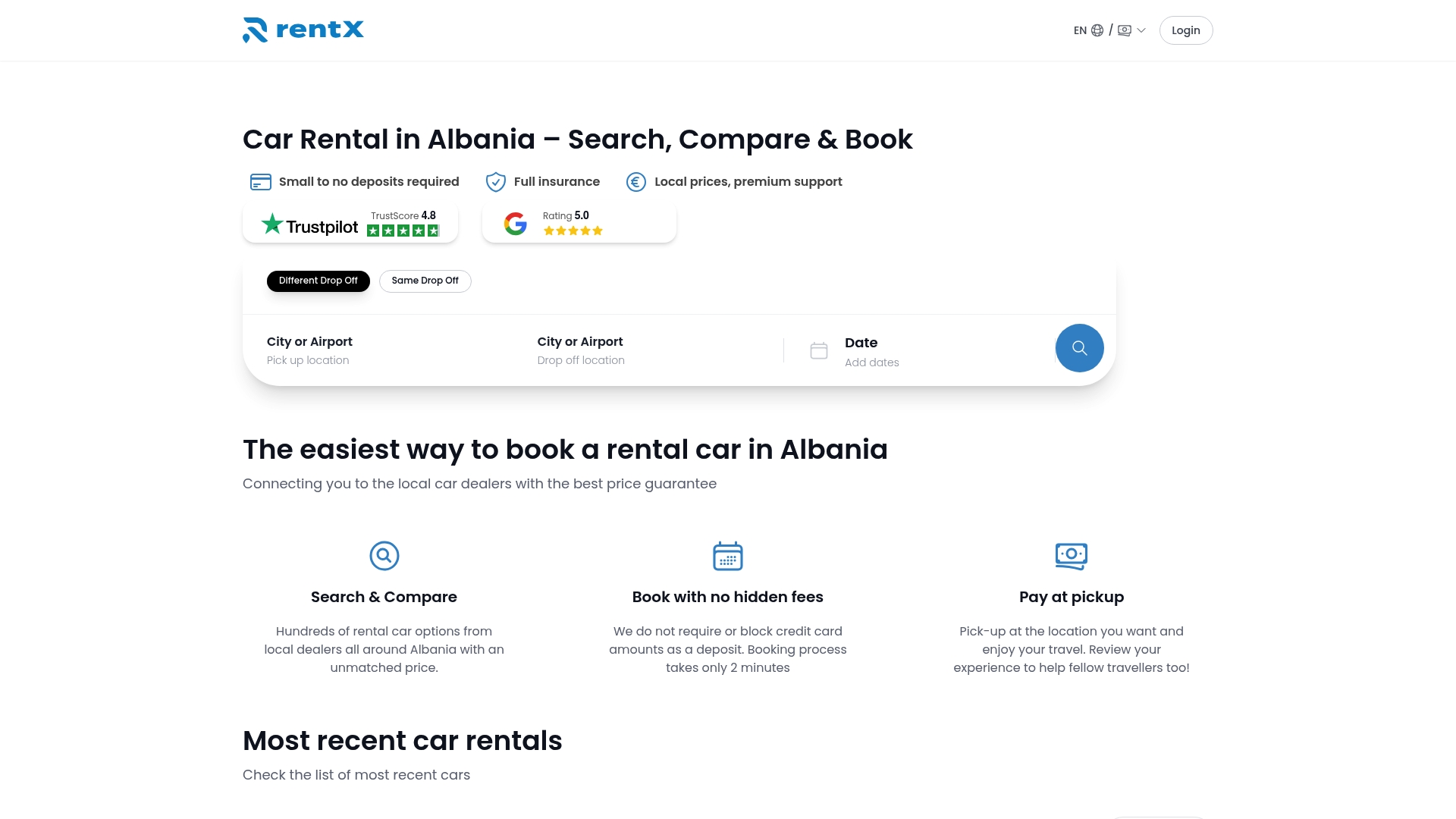
The platform offers comprehensive vehicle selection from economy to executive categories, ensuring you find transport matching your specific business requirements. Transparent pricing eliminates hidden fees and deposit surprises that complicate expense reporting. Rental extras including GPS, Wi-Fi, and additional driver options enhance your productivity throughout Albanian business travel.
Convenient airport collection and flexible return locations accommodate tight schedules and multi-city itineraries. Instant booking confirmation and 24/7 multilingual support provide peace of mind when plans change unexpectedly. Discover why RentX has become the preferred choice for business professionals seeking hassle-free Albanian car rental experiences.
Frequently asked questions
What documents do I need to rent a car in Albania?
You’ll need a valid driving licence held for at least one year, passport or national ID card, and a credit card in the driver’s name. An international driving permit is required if your licence uses non-Latin alphabet characters. Ensure all documents remain valid throughout your entire rental period to avoid collection complications.
Are there any specific insurance options I should consider?
Basic third-party liability insurance is legally mandatory but often excludes windscreen, tyre, and undercarriage damage. Comprehensive collision damage waiver and theft protection provide essential coverage for business travellers. Review your existing travel insurance or credit card benefits before purchasing duplicate protection, but ensure no coverage gaps remain. Check rental provider policies carefully to understand exactly what’s included and excluded from standard agreements.
Can I add additional drivers to my rental?
Yes, most rental providers allow additional drivers, but they must be declared at booking or collection and meet the same age and licence requirements as the primary driver. Additional driver fees typically range from €5 to €10 per day depending on vehicle category. All drivers must present valid documentation and be physically present during vehicle collection. Explore rental extras options to add drivers and other conveniences efficiently during your booking process.
What should I check before returning the rental car?
Confirm the fuel level matches your rental agreement terms, typically requiring a full tank with receipt as proof. Document the vehicle’s condition with timestamped photographs matching your collection inspection. Verify return time falls within your contract period to avoid late fees. Remove all personal belongings and check boot, glove compartment, and door pockets thoroughly. Request written confirmation of vehicle acceptance and zero outstanding balance before leaving the rental facility to protect against subsequent disputed charges.